


Modern general dentistry relies on smart tools that help you protect your teeth before problems grow. At Skabelund and Lopez Dentistry dental office, your dentist uses advanced diagnostic tools to see what your eyes cannot. These tools find early tooth decay, hidden infections, gum disease, and signs of grinding. Early discovery means shorter visits, fewer surprises, and less pain. You gain time, control, and clear choices. In this blog, you will see six common tools your dentist may use at your next visit. You will understand what each tool does, what you can expect, and why it matters for your long term health. You will also see how these tools work together to give a full picture of your mouth. That clear picture guides every decision, from a simple cleaning to complex treatment. With the right tests, routine care becomes more effective after treatment.
1. Digital dental X rays
Digital X rays use low dose radiation to create pictures of your teeth and jaw. Your dentist views these pictures on a screen. You see the same image and can follow each step.
Digital X rays help your dentist find
- Early tooth decay between teeth
- Infections at the root
- Bone loss from gum disease
- Impacted teeth
You wear a shield over your body. The sensor rests in your mouth for a few seconds. The image appears right away. This speed helps your dentist explain what is happening while you sit in the chair.
2. Intraoral cameras
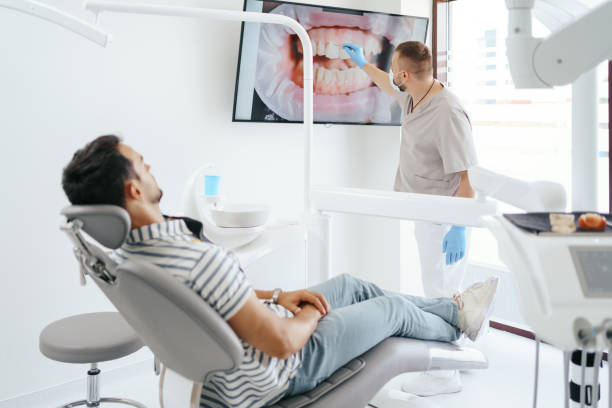
An intraoral camera is a small camera that fits inside your mouth. It looks like a thick pen with a light at the tip. Your dentist moves it around your teeth and gums. The live picture shows on a screen in front of you.
This tool helps your dentist
- Show chips, cracks, or worn edges
- Spot plaque and tartar
- Watch changes over time
You see what your dentist sees. That clear view builds trust. It also helps you understand why a filling, crown, or deep cleaning may be needed. You can ask questions while looking at your own teeth in real time.
3. Panoramic and cone beam images
Sometimes your dentist needs a wider view. A panoramic or cone beam image shows your whole mouth, both jaws, and nearby structures in one scan. You stand or sit while a machine circles your head.
These scans help your dentist
- Plan extractions
- Check wisdom teeth
- Review jaw joints
- Look for cysts or other growths
Panoramic images give a flat overview. Cone beam images give a three-dimensional view. Your dentist chooses the type that fits your needs. These scans are not used at every visit. They are used when your dentist needs more detail to protect your health.
4. Periodontal charting and gum measurement
Healthy gums support your teeth. Gum disease can be quiet at first. You may not feel pain until damage is serious. Periodontal charting helps your dentist measure gum health before damage grows.
Your dentist or hygienist uses a thin measuring tool to check the space between your tooth and gum. These spaces are called pockets. Numbers are called out and entered in your record.
This process shows
- Early gum swelling
- Bone loss around teeth
- Bleeding points
Regular charting lets your dentist compare numbers over time. If pockets grow deeper, your dentist can act fast with cleaning, medicine, or referral.
5. Cavity detection tools
Some decay hides in grooves or under the surface. Cavity detection tools use light or sound to find weak spots that look normal to the eye.
Common types include
- Laser light that reflects differently on soft tooth
- Fluorescent light that makes decay glow
- Electronic meters that read changes in tooth structure
Your dentist moves a small tip across the tooth. The device gives numbers or tones. These readings help your dentist decide if a spot needs a filling or only closer watch. This protects healthy teeth and reduces guesswork.
6. Oral cancer screening tools
Oral cancer can appear on the tongue, cheeks, gums, or throat. Early spots can be small and easy to miss. A routine screening during your exam helps find these changes when treatment works best.
Your dentist will
- Look and feel inside your mouth and along your jaw and neck
- Ask about sores that do not heal or changes in your voice
- Use special lights or dyes if needed to highlight suspicious spots
These tools can show tissue that looks normal in regular light. If your dentist sees concern, a referral for a closer test may follow. This extra step guards your health far beyond your teeth.
Comparison of common diagnostic tools
| Tool | Main purpose | How often used in general practice | What you feel
|
|---|---|---|---|
| Digital X rays | Find decay, infection, bone loss | Every 1 to 2 years or as needed | Sensor in mouth for a few seconds |
| Intraoral camera | Show cracks, wear, plaque | Often during exams and treatment planning | Small camera touching teeth or gums |
| Panoramic or cone beam scan | View whole mouth and jaws | For extractions, implants, complex cases | Standing still while the machine moves around the head |
| Periodontal charting | Measure gum and bone health | At regular checkups, often yearly | Gentle probing between tooth and gum |
| Cavity detection device | Find early decay in grooves | As needed for suspicious teeth | Small tip gliding over teeth |
| Oral cancer screening tools | Spot early tissue changes | At routine exams for adults | Visual check and light touch along the mouth and neck |
How these tools work together for you
Each tool gives one piece of information. Together, they show your whole mouth story. X-rays show roots and bone. Cameras show surfaces. Gum measurements show support. Cancer screening protects soft tissue.
This full picture helps your dentist
- Find problems early
- Plan care that fits your life
- Track healing and change
You gain clear facts and real choices. You can ask better questions and set goals for your own health. With these modern tools, a routine visit becomes a strong shield for your teeth, gums, and body.