

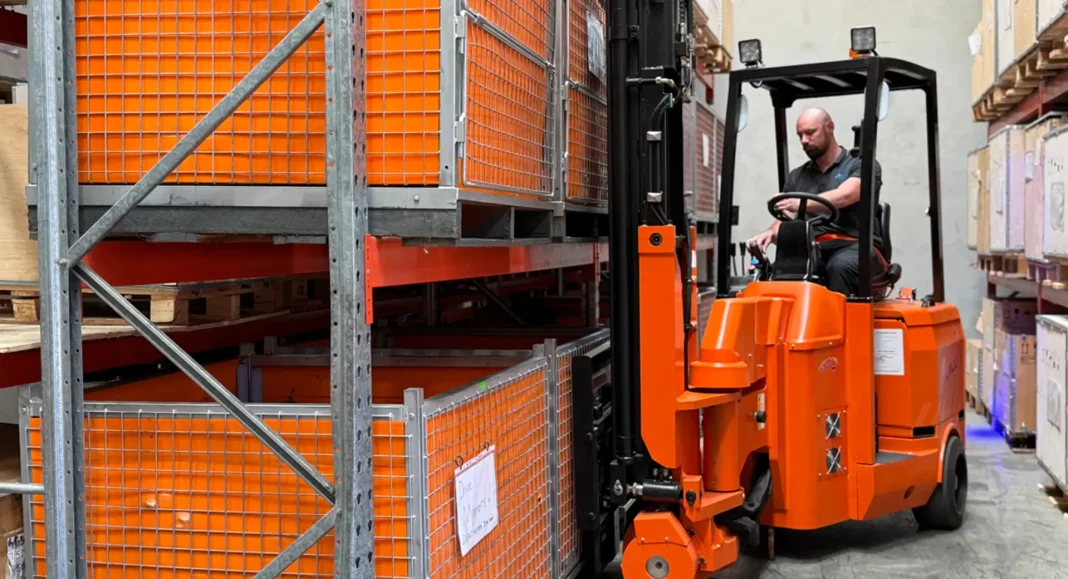

Warehouses and distribution facilities are increasingly using articulated forklift solutions to improve storage efficiency and material handling performance in confined spaces. As businesses continue managing larger inventory volumes within limited warehouse areas, articulated forklifts provide the flexibility needed to move goods safely through narrow aisles while maintaining strong lifting capabilities. Their unique steering design allows operators to work more efficiently in compact environments where traditional forklifts may struggle to operate effectively.
Modern logistics and warehousing industries require equipment that supports faster stock movement, accurate inventory handling, and maximum space utilisation. Articulated forklifts have become an important solution because they combine manoeuvrability with high lifting performance, helping businesses optimise warehouse layouts without reducing accessibility. Industries including retail, manufacturing, wholesale distribution, and e-commerce increasingly rely on these forklifts to support demanding daily operations.
What Makes Articulated Forklifts Different
Articulated forklifts are designed with a pivoting chassis that allows the front and rear sections of the forklift to turn independently. This articulation system gives the forklift greater flexibility when navigating tight warehouse aisles and confined operating spaces.
Traditional forklifts often require wide turning circles, limiting how closely storage racks can be positioned. Articulated forklifts can operate in significantly narrower aisles, allowing businesses to increase storage density while still maintaining efficient product access throughout the warehouse.
This design also improves handling precision during loading and unloading tasks. Operators can position loads more accurately with reduced repositioning, improving workflow efficiency and reducing the risk of accidental product or rack damage.
Many articulated forklift models are also capable of operating both indoors and outdoors, providing greater versatility across different warehouse and industrial environments. Businesses benefit from using a single machine for multiple handling tasks instead of maintaining separate equipment for different applications.
The Importance Of Warehouse Space Optimisation
Warehouse space has become increasingly valuable as storage demands continue rising across many industries. Businesses are constantly searching for ways to maximise storage capacity without expanding facilities or increasing operational costs.
Articulated forklifts help businesses use available warehouse space more efficiently by supporting narrower aisle layouts and higher-density storage systems. This allows companies to increase pallet positions and improve overall inventory storage capacity within existing facilities.
Efficient space utilisation is particularly important for urban warehouses where commercial property costs remain high. By improving storage density, businesses can reduce the need for additional warehouse space while maintaining organised inventory systems and operational efficiency.
How Articulated Forklifts Improve Productivity
Productivity is one of the most important factors in modern warehousing and logistics operations. Delays in stock movement or inefficient handling processes can increase labour costs, reduce operational performance, and affect customer satisfaction.
Articulated forklifts improve productivity by allowing operators to move through warehouse aisles more efficiently while maintaining precise load control. Their compact turning ability reduces unnecessary manoeuvring, helping workers complete handling tasks more quickly.
These forklifts also improve loading and unloading efficiency within tight storage environments. Operators can access pallet positions more directly, reducing retrieval times and improving overall workflow consistency throughout the warehouse.
Safety Benefits In Busy Warehouse Environments
Safety remains a major priority in warehouses where forklifts operate continuously around workers, inventory, and storage systems. Poor manoeuvrability or limited visibility can increase the risk of collisions, damaged products, and workplace accidents.
Articulated forklifts are designed to provide improved control and visibility in confined spaces. Their steering system allows operators to navigate narrow aisles more precisely, reducing the likelihood of impacting racks or stored goods during operation.
Enhanced visibility from the operator cabin also improves awareness within busy warehouse environments. Better sightlines support safer handling practices and reduce the risk of accidents involving pedestrians or nearby equipment.
Challenges Facing Modern Warehousing Operations
Warehousing businesses continue facing increasing pressure to improve efficiency while adapting to changing supply chain demands. Growing inventory levels, labour shortages, and rising operational costs have made warehouse optimisation more important than ever before.
Limited storage space remains one of the biggest operational challenges for many businesses. Poorly organised warehouse layouts can reduce productivity and create safety risks if equipment cannot move efficiently throughout the facility. Articulated forklifts help address these issues by supporting flexible and space-efficient storage configurations.
The rapid growth of e-commerce has also increased demand for faster order fulfilment and more accurate inventory management. Warehouses require equipment capable of supporting high-volume operations while maintaining reliability and efficiency.
Conclusion
Articulated forklifts provide an effective solution for businesses seeking to improve warehouse efficiency, maximise storage space, and maintain safe material handling operations. Their ability to operate in narrow aisles while delivering strong lifting performance makes them highly valuable for modern logistics and warehousing environments. As businesses continue adapting to increasing inventory demands and evolving supply chain expectations, articulated forklifts will remain an important investment for improving productivity, storage management, and long-term operational efficiency.