

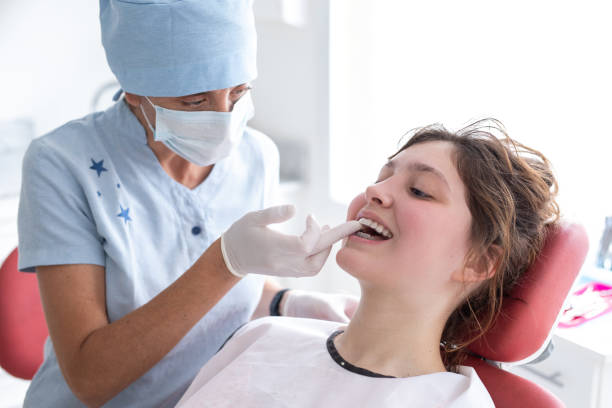

Routine dental screenings should feel clear and simple. New tools now help you get that. When your dentist uses current technology, you gain faster answers, fewer surprises, and stronger plans for your mouth. You see what your dentist sees. You understand risks early. You choose care with less fear and more control. Today, many offices use digital X rays, oral cameras, and 3D scans in everyday checkups. These tools do more than find cavities. They help spot gum disease, bone loss, and early signs of infection before you feel pain. They also support treatment planning for options like dental implants Annapolis, crowns, and other care. This blog explains three key benefits of using technology in general dental screenings. You will see how it protects your health, saves time, and supports better decisions for you and your family.
1. You catch problems earlier and avoid more pain
Early problems in teeth and gums often stay silent. You may feel fine while small spots of decay grow between teeth. You may see no change while bone slowly thins under the gums. New screening tools help your dentist find these quiet changes before they turn into toothaches or infections.
Digital X rays use less radiation than many older systems. The images appear on a screen in seconds. Your dentist can zoom in, change contrast, and see tiny changes. That helps spot:
- Very small cavities between teeth
- Early bone loss around tooth roots
- Hidden infections at the root tip
Intraoral cameras add another level. They are small handheld cameras that show close views of each tooth. You can see cracks, worn spots, or red, swollen gum tissue on a screen in real time. That shared view builds trust. It also makes it easier to say yes to treatment while the problem is still small.
3D scans, also called cone beam images, give a three-dimensional picture of your teeth, bones, and sinuses. These scans are not needed for every visit. Yet when used, they can reveal cysts, impacted teeth, or bone defects that a flat image may miss.
The National Institute of Dental and Craniofacial Research explains that early care for tooth decay and gum disease can prevent tooth loss and more serious infection.
2. You save time and reduce repeat visits
Modern screening tools not only find problems. They also cut delays. Old film X-rays needed time to process. If an image failed, you had to repeat it. Now digital images appear at once. Your dentist can confirm quality on the spot. That often means fewer retakes and a shorter visit.
Here is a simple comparison of common screening tools.
| Screening tool | Typical use time per image | Main use | Common benefit to you
|
|---|---|---|---|
| Traditional film X ray | 5 to 10 minutes | Check teeth and bone | Basic view, slower process |
| Digital X ray | Under 1 minute | Check teeth and bone | Fast image, less radiation, easier sharing |
| Intraoral camera | 1 to 3 minutes for a few teeth | Close view of tooth surfaces | Clear pictures, better understanding |
| 3D cone beam scan | Under 5 minutes | Full 3D view of teeth and jaws | Better planning for complex care |
Digital records also cut time. Your dentist can store images with your chart. Next visit, they can compare images side by side to track change. That quick view can show if a spot is stable or growing. It can rule out problems without new tests. It can also support second opinions without new X-rays.
When technology works well, you often face fewer surprises. Treatment can be planned in fewer visits, with clear steps and clear timing. That matters when you balance work, school, and family needs.
3. You make stronger choices about your own care
Fear often comes from the unknown. When you sit in a chair and hear numbers or terms that you do not know, you may feel pushed. Modern tools can change that feeling. They turn hidden problems into clear images that you can see and question.
During a screening, your dentist can pause, point to the screen, and explain:
- Where decay starts and where it stops
- How deep a crack runs
- How much bone supports each tooth
That clear view helps you weigh choices. You can ask about simple fillings, crowns, or longer plans such as implants or bridges. When you see how much bone you have, a plan for an implant or other advanced step feels less abstract. It becomes a clear path instead of a guess.
The Centers for Disease Control and Prevention notes that strong oral health is linked to heart health, diabetes control, and pregnancy outcomes. When you use technology to understand your mouth, you also protect your general health.
Better information can also lower costs over time. When you catch problems early and choose timely care, you often avoid root canals, extractions, or emergency visits. That protects both your body and your budget.
How to talk with your dentist about technology
You do not need to know device names. You only need clear questions. During your next screening, you can ask three simple things.
- What tools will you use today to check my teeth and gums
- Can you show me what you see on the screen
- What are my choices if you find a problem
If you care about radiation, you can also ask how often you need X-rays and why. Many offices follow current guidance that tailors X-ray use to your risk level and age. That protects you while still giving enough information to keep you safe.
Key takeaways for your family
Technology in general dental screenings gives you three clear gains. You catch silent problems earlier. You save time and reduce repeat visits. You make stronger choices for your own care. When you know what to expect, screenings feel less tense for both adults and children.
You can use this knowledge to guide your next visit. Ask to see your images. Listen to the explanation. Then choose a plan that fits your health, your time, and your family’s needs. That steady approach keeps your mouth strong and supports your whole body’s health over many years.