

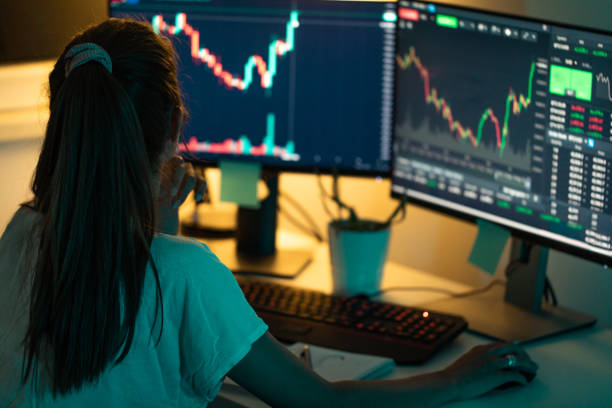

Financial markets were once dominated by institutions with exclusive tools, expensive data feeds, and tightly controlled access. Retail investors relied on delayed quotes, basic brokerage interfaces, and fragmented research sources. Over the past decade, however, technology has significantly reshaped how individuals engage with global markets.
Among the platforms contributing to this transformation is TradingView — not simply as a charting service, but as part of a broader shift toward transparent, data-driven, and globally connected trading environments.
This article explores how platforms like Trading View reflect the evolution of modern market access and what that means for today’s traders and investors.
From Closed Terminals to Open Digital Platforms
In the early 2000s, advanced charting software was often limited to desktop installations. Many tools required heavy system resources, manual updates, and subscription-based data packages. Collaboration was minimal, and sharing analysis typically meant screenshots in forums or email threads.
The shift toward browser-based financial platforms marked a turning point. Web-based charting reduced hardware limitations and improved accessibility. Trading View emerged during this transition, offering interactive charts that could be accessed directly online.
This eliminated technical barriers and made advanced visualization tools available to a wider audience.
A Unified View of Multiple Asset Classes
Today’s traders rarely focus on a single market in isolation. Equity performance may depend on interest rate expectations. Cryptocurrency volatility can reflect global liquidity conditions. Commodity prices often move alongside currency fluctuations.
A platform that supports multi-asset coverage allows traders to study these relationships without switching between unrelated tools.
Trading View provides access to:
- Global stock markets
- Major forex pairs
- Cryptocurrency markets
- Futures contracts from leading exchanges
- Bond yields and fixed-income data
This integrated structure supports comparative analysis, helping users understand correlations and macroeconomic trends more effectively.
Real-Time Data as a Standard Expectation
Speed and responsiveness are no longer premium features — they are baseline requirements. Traders expect price data to update immediately and charts to react without lag.
Modern platforms reflect this demand. Real-time chart updates allow users to observe breakouts, reversals, and consolidation patterns as they develop. For short-term traders, this responsiveness supports quicker reaction times. For long-term investors, it enhances situational awareness during volatile periods.
In a globally connected market environment, timing matters. Reliable real-time visualization tools have become essential components of market participation.
The Importance of Customization in Analysis
No two traders approach markets the same way. Some rely heavily on technical indicators. Others prioritize price action and structure. Some analyze short-term intraday movements, while others focus on multi-year trends.
A flexible charting platform must accommodate these differences.
Trading View allows users to:
- Customize chart layouts
- Apply multiple indicators simultaneously
- Use drawing tools for marking key levels
- Save templates for recurring strategies
- Compare multiple assets side by side
Customization enables traders to build analysis environments aligned with their individual methodologies rather than forcing a one-size-fits-all framework.
Community-Driven Insights and Transparency
One notable aspect of modern trading culture is openness. Analysis is increasingly shared in public spaces rather than kept private.
Platforms that integrate social publishing features allow traders to post chart-based ideas, discuss scenarios, and receive feedback. This creates a collaborative atmosphere where individuals can refine their thinking by examining different perspectives.
Trading View incorporates community participation into its ecosystem, enabling users to publish and review market analyses. While independent research remains critical, exposure to diverse viewpoints can enhance critical thinking and broaden understanding.
The Rise of Strategy Testing and Automation
As markets have become more competitive, traders have placed greater emphasis on systematic approaches. Strategy testing helps determine whether a trading method performs consistently across historical data.
Platforms that offer scripting capabilities support this analytical depth. Trading View’s scripting environment allows users to build and test custom indicators and strategies.
Even for traders who do not code, the presence of shared community scripts provides insight into alternative analytical methods and structured rule-based thinking.
Mobile Accessibility and Continuous Monitoring
Global markets operate across time zones, and price movements do not pause when traders step away from their desks. Mobile accessibility has therefore become an essential feature of modern trading platforms.
With synchronized chart layouts and alerts available across devices, traders can maintain awareness of market conditions wherever they are. This continuity ensures that analysis performed on a desktop environment remains accessible on mobile without disruption.
Such flexibility reflects the evolving expectations of digitally connected traders.
Reflecting Broader Changes in Financial Participation
The growth of retail trading participation in recent years has coincided with the development of more intuitive, data-rich platforms. Individuals now expect:
- Transparent pricing information
- Immediate chart updates
- Multi-asset visibility
- Collaborative idea exchange
- Analytical depth without institutional cost barriers
Trading View represents one example of how technology has responded to these expectations. By combining visualization tools, global market coverage, and interactive features, it aligns with the demands of contemporary market participants.
Final Perspective
Financial markets continue to evolve, shaped by technology, global connectivity, and expanding retail engagement. Platforms that prioritize accessibility, analytical flexibility, and real-time data have become central to this transformation.
Trading View reflects this broader shift toward democratized market analysis. It serves as a digital workspace where traders can explore data, compare assets, and refine strategies in a structured environment