

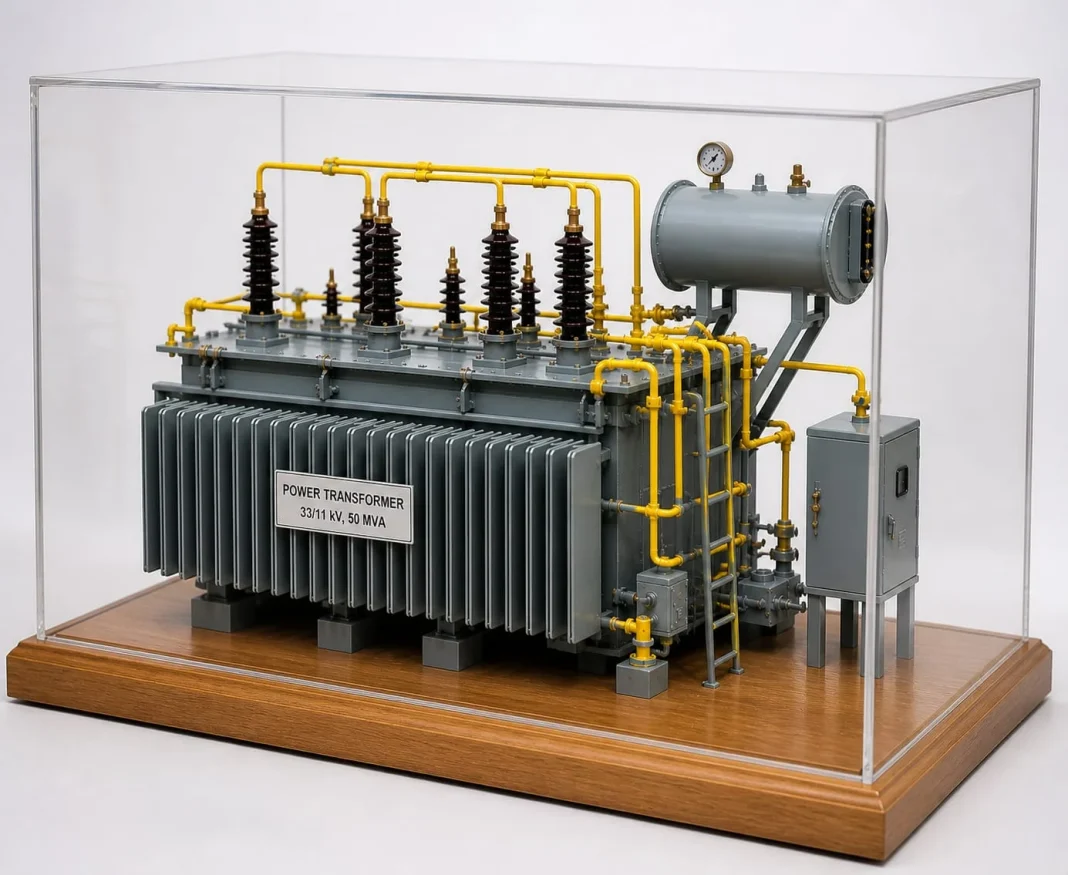

The Difference Between Looking Accurate and Being Accurate
There’s a meaningful difference between a model that looks like a mechanical assembly and one that actually demonstrates how that assembly functions. A gearbox model, for instance, could be built to look visually correct from the outside while completely misrepresenting how the internal gears actually mesh and transfer motion — and for most purposes, that gap defeats the entire point of building the model in the first place.
A mechanical engineering model is typically commissioned specifically to demonstrate function, whether that’s for a training program, a client presentation, an investor pitch, or an academic setting. This functional requirement changes the entire approach to the build compared to a purely decorative model, since every component needs to be dimensionally and mechanically accurate enough to actually behave the way the real system does, at least in simplified form.
Working From Engineering Data, Not Just Visual References
Building this kind of model properly starts with genuine engineering data — CAD files, tolerances, and an understanding of how each component actually interacts with the ones around it — rather than working purely from a photograph or a general visual reference of what the finished assembly looks like. This is a meaningfully different starting point than most architectural or decorative model work, and it demands a model maker who can genuinely interpret engineering documentation, not just replicate a shape.
Simplification is often necessary and appropriate, since a fully accurate scale reproduction of every internal component in a genuinely complex mechanical system isn’t always practical or even useful for the demonstration purpose. The skill lies in knowing which details are essential to preserve for the model to remain functionally honest, and which can be simplified or omitted without misrepresenting how the system actually works.
This is exactly where close collaboration with the original design engineers becomes essential rather than optional. They understand which details matter functionally and which are purely incidental to the specific point the model needs to demonstrate, and that judgment is very difficult for a model maker to make correctly without that direct engineering input throughout the build process.
Common Applications in Practice
Product development teams often commission mechanical models during the design review process, using a physical representation to catch spatial or functional conflicts before committing to expensive tooling or full manufacturing. Seeing components interact physically, even in simplified model form, sometimes reveals problems that aren’t obvious from a CAD assembly viewed only on a screen.
Training and educational contexts represent another major use case, where a working or semi-working mechanical model helps students or new employees understand a system’s function far more intuitively than a textbook diagram or an assembly manual ever manages to on its own. Being able to physically operate or observe a simplified mechanism tends to build understanding that sticks, in a way that passive reading typically doesn’t.
Patent and legal contexts occasionally call for this kind of model too, where demonstrating exactly how a mechanism functions in physical, unambiguous form can matter for intellectual property discussions or legal proceedings where a written description alone might leave room for interpretation or dispute.
Finding a Studio Equipped for This Work
Not every model-making studio is equipped to handle this category of work well, since it requires a genuine intersection of craftsmanship and engineering literacy that’s less common than pure aesthetic skill alone. When evaluating a studio for this kind of project, ask specifically about their experience working from CAD data and their process for maintaining functional accuracy throughout a build.
A studio that treats a mechanical engineering model as simply another decorative object to build, rather than a functional demonstration tool that needs to genuinely represent how a real system operates, is likely to miss exactly the details that matter most for this particular category of work.
Function First, Polish Second
It’s worth remembering, throughout this entire process, that function has to come before polish for this category of work. A beautifully finished model that misrepresents how a mechanism actually operates has failed at its core purpose, no matter how impressive it looks sitting on a table under good lighting.
Studios that internalize this priority — treating visual finish as something layered on top of a functionally accurate foundation, rather than a substitute for one — are the ones consistently capable of delivering a mechanical engineering model that genuinely holds up to informed scrutiny from the engineers and technical stakeholders who matter most.
Testing the Model Before It Goes Into Use
Before a mechanical model gets used for its intended purpose — whether that’s a client presentation, a training session, or a design review — it’s worth having someone from the original engineering team put it through its paces first, checking that any moving parts function as intended and that the represented mechanism genuinely behaves the way the real system does.
This kind of pre-use verification catches issues before they surface in front of an audience that matters, and it’s a small additional step that meaningfully protects the credibility of the presentation the model was built to support in the first place.
A Reminder Worth Repeating
It bears repeating, because it’s easy to lose sight of during a busy production schedule: the entire value of this category of model rests on its functional honesty. A visually stunning model that quietly misrepresents how a mechanism works isn’t a lesser version of success — it’s a different kind of failure than a purely cosmetic model falling short, and one with potentially more serious downstream consequences.
Keeping this priority front and center throughout the commissioning and build process, rather than letting visual ambition quietly override functional accuracy along the way, is what ultimately separates a genuinely useful engineering demonstration piece from an attractive but misleading prop.