

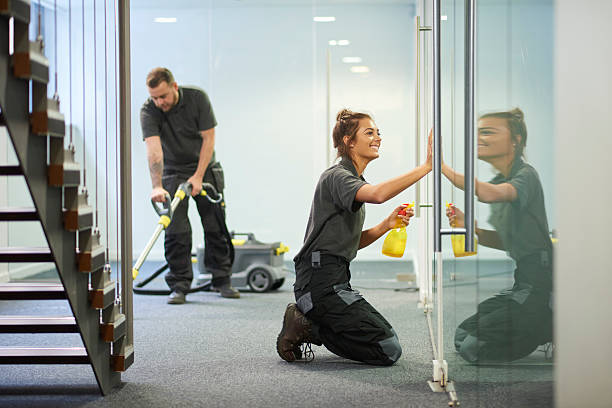

Walk into any office and your feet tell you something before your eyes do. A gritty patch near the entrance, a sticky spot by the kitchen, a carpet that smells faintly of old coffee. People pick up on these things without saying a word, and they form opinions quickly. Clients notice. Staff notice too, even when they never bring it up.
Floors are the biggest surface in any workspace, and they take the most punishment. Hundreds of shoes, wheeled chairs, dropped lunches, rain tracked in from the street. Still, floors are often the last item on the cleaning list. This article explains why that habit costs more than most managers expect, what different floor types need, and how to set up a routine that keeps things tidy without burning through the budget.
Why floors deserve more attention than they get
Most offices run a daily clean that covers desks, bins, bathrooms and the kitchen. Vacuuming usually happens, and a mop might come out on Fridays. That keeps the surface looking acceptable, but surface is the key word. Dirt that settles deep into carpet fibres or sits in the grout lines between tiles does not disappear with a quick pass.
Over time that buried grime wears the floor down. Grit acts like fine sandpaper under foot traffic, dulling vinyl, scratching timber and cutting into carpet fibres. Replacing flooring in a commercial space is expensive and disruptive, so protecting what you already have is one of the smartest ways to spend a cleaning budget.
What actually ends up on an office floor
It helps to know what you are dealing with. Offices in the city see a particular mix of mess.
- Fine grit and sand from footpaths, which grinds into every surface it touches.
- Rainwater and mud during wet weather, especially near lifts and entrances.
- Food and drink spills around kitchens, meeting rooms and desks.
- Oils and skin particles that settle into carpet and build up in high-traffic lanes.
- Dust that drifts down from air vents and sticks to anything slightly damp.
None of these are dramatic on their own. The trouble is that they stack up week after week. By the time a stain or smell becomes obvious, the dirt underneath has usually been there for months.
Hard floors: tiles, vinyl, timber and polished concrete
Hard floors look easy to maintain, and that is part of why they get neglected. A mop and bucket seem like enough. In practice, each material has its own quirks.
Tiles are tough, but the grout between them is porous. It absorbs spills and darkens over time. Regular scrubbing with the right cleaner keeps grout lines light and stops bacteria settling in. Vinyl is forgiving, though harsh chemicals can strip its finish and leave it cloudy. Timber needs gentle products and very little water, since moisture lifts boards and dulls the sealant. Polished concrete looks sleek, but it can stain from oils and acidic spills if it is not sealed and maintained properly.
Using one product for everything is a common mistake. A cleaner that works on tiles might damage timber. This is one reason many businesses bring in specialists for Office Floor Cleaning Sydney rather than leaving it to a general daily clean. Trained crews carry the right machines and products for each surface, and they know when a floor needs scrubbing, buffing or resealing rather than another coat of polish.
Carpet: the quiet collector
Carpet is comfortable underfoot and good at dampening noise, which is why so many open-plan offices use it. It is also a filter. Every particle that falls on it gets trapped in the pile. Vacuuming lifts loose dust from the top, but it cannot pull out the sticky residue that bonds to fibres deeper down.
Walk lanes tell the story. Look at the carpet between the front door and the reception desk, or the path from the kitchen to the main work area. Those strips are often darker than the rest of the room. That colour is soil, packed in by thousands of footsteps. Left alone, it becomes harder to remove each month.
Why occasional DIY carpet cleaning falls short
Some offices hire a rental machine and do the job themselves on a weekend. It feels thrifty, but results are often patchy. Rental units tend to leave too much water in the carpet, which means long drying times and a risk of mould beneath the surface. Cheap detergents can leave residue that attracts new dirt faster than before.
Professional crews work differently. They test the fibre type, pre-treat stains, use hot water extraction or low-moisture methods where suitable, and finish with proper drying. If you are weighing up Office Carpet Cleaning Sydney for your workplace, look for a provider who explains which method they plan to use and why, instead of one who offers a single flat approach for every job.
Health, safety and comfort
Floors are not only a looks issue. Dust and allergens trapped in carpet can aggravate sneezing, itchy eyes and breathing problems, particularly for people with asthma. Regular deep cleaning reduces what gets stirred back into the air each time someone walks past.
Slips are the other concern. Wet entrances, greasy kitchen tiles and over-polished surfaces can all cause falls. A slip injury at work means paperwork, time off and possibly a claim. Using the right products, putting out wet floor signs and keeping entry mats clean are simple steps that lower the risk.
How often should you clean?
There is no single schedule that suits every office, but a rough guide helps.
- Daily: vacuum carpets and sweep or damp mop hard floors, with extra attention to entrances and kitchens.
- Weekly: spot treat stains, clean under desks and around bins, and scrub heavy-traffic areas.
- Every three to six months: deep clean carpets, and scrub and recondition hard floors.
- Yearly: inspect sealants and finishes, and book any buffing or resealing.
Busy offices with lots of visitors, or those near a train station or a main road, will usually need deep cleans closer to the three-month mark. Quieter spaces with a smaller team can stretch to six. Booking regular Office Carpet Cleaning Sydney visits on a calendar is far cheaper than waiting until carpet looks bad, because heavy staining takes more time, more product and sometimes a second visit to fix.
Questions to ask before you hire a cleaning company
Not every provider is the same, so ask a few direct questions before signing anything.
- Do you have insurance, and can you show me the certificate?
- Which products and machines will you use on my specific floor types?
- Can you clean after hours so my team is not disrupted?
- Are your staff trained and background checked?
- What happens if I am not happy with the result?
A reliable company will answer plainly and offer to walk the site before quoting. Be cautious of anyone who gives a price over the phone without asking about size, floor type or traffic levels. If you are comparing options for Office Floor Cleaning Sydney, ask for references from similar businesses and check how long they have been operating locally.
Small habits that make a big difference
Professional cleaning works best when staff pitch in a little. None of these habits take much effort.
- Place good quality mats at every entrance and shake or vacuum them often.
- Clean spills straight away rather than leaving them until the evening clean.
- Keep food and drinks away from carpeted zones where possible.
- Report stains and damage early so the cleaners can treat them while they are fresh.
- Move chairs and loose items before the cleaners arrive so they can reach every corner.
The real cost of ignoring your floors
Skipping floor care looks like a saving, but the bill arrives later. Carpets that could have lasted ten years may need replacing in six. Tile and grout that could have been scrubbed back to life may need relaying. Add in the risk of complaints, sick days and a poor first impression, and the savings disappear quickly.
On the other side, a steady cleaning plan keeps your flooring looking good for years, holds down repair costs and gives your team a nicer place to work. You do not need to spend a fortune. You just need to be consistent and use the right methods for each surface.
Final thoughts
Floors say a lot about a business, and the effort to keep them in good shape is smaller than most people think. Start by looking at your own space with fresh eyes. Check the entrance, the kitchen and the busiest walkways. If the carpet looks tired or the hard floors have lost their shine, it may be time to call in help.
For workplaces that want a dependable result, professional Office Floor Cleaning Sydney services can restore hard surfaces and protect them for the long term, while Office Carpet Cleaning Sydney specialists can lift deep soil and odours that a regular vacuum never reaches. Combine both with a few good habits from your own team, and your office will stay cleaner, healthier and more welcoming all year round.