

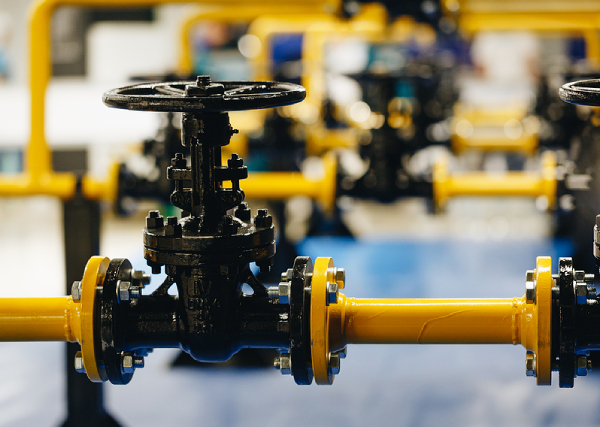

This article provides a comprehensive PRV maintenance guide covering inspection frequencies (monthly, quarterly, and annual), pressure testing procedures (static lock-up and dynamic flowing tests), five common failure patterns to recognize, and documentation best practices. Includes a call to action for scheduled maintenance services.
Introduction: Why PRV maintenance is non-negotiable
A pressure reducing valve operates continuously, often cycling thousands of times per day under pressure fluctuations, temperature changes, and potential contaminants. Yet PRVs are frequently neglected until they fail.
The cost of neglect is substantial: a failed PRV can destroy downstream equipment worth 10-100 times the valve’s cost. Emergency repairs cost 3-5 times more than scheduled maintenance. Unplanned downtime halts production. A systematic maintenance program transforms PRVs from a liability into a reliable asset.
Recommended inspection frequencies
Monthly inspections (5 minutes per valve):
- External leakage around body, bonnet, or fittings
- Unusual noise (chattering, hissing, banging, whistling)
- Pressure gauge readings (downstream stable vs. setpoint)
- Valve position indicator (should not be fully open or closed at normal flow)
- Surrounding area for staining or corrosion
Quarterly inspections (30 minutes per valve):
- Strainer cleaning – remove, inspect, record debris type and quantity
- Sensing line check – verify clear, connections tight, no damage
- Pressure gauge verification – test against calibrated gauge
- Set point verification (flowing) – confirm downstream pressure matches setpoint
- Lock-up test – close downstream valves, verify no pressure creep
- Visual internal inspection – check diaphragm and spring if accessible
Annual inspections (1-2 hours per valve):
- Complete disassembly
- Component measurement – seat width, disc thickness, spring free length
- Diaphragm replacement (preventative, regardless of condition)
- Seat and disc inspection – replace if pitting, grooving, or erosion visible
- Body inspection – check for cracks, corrosion, or erosion
- Full rebuild or replacement of all wear parts
- Documentation update with all measurements and final set pressure
Two essential pressure tests
Lock-up test (static): Close all downstream isolation valves. Observe downstream pressure gauge for 5 minutes. A healthy PRV holds pressure steady or increases by no more than 2-3 PSI. If pressure continues to rise, the PRV is “creeping” and requires seat/disc replacement.
Flowing set point test (dynamic): Establish stable flow at 30-60% of maximum expected flow. Record upstream and downstream pressures. Open an additional downstream fixture to increase flow by 20-30%. Observe downstream pressure after stabilization (allow 10-30 seconds). Pressure should return to within ±5% of setpoint. Reduce flow back to original rate and verify pressure returns to setpoint with no hysteresis.
Pass/fail criteria:
- Within ±3% of setpoint = Pass
- Within ±5% = Marginal (increase inspection frequency)
- 5% deviation or fails to return = Fail (rebuild or replace)
Five common failure patterns
1. Grooved seat and disc – Visible groove on seating surfaces. Caused by normal wear accelerated by debris. Consequence: lock-up failure (creeping pressure). Solution: Replace seat and disc; improve upstream filtration.
2. Stiff or torn diaphragm – Diaphragm feels hard rather than supple, or has visible tears. Caused by age, chemical attack from water treatment, or over-flexing from oversizing. Consequence: slow response, pressure instability, or complete regulation failure. Solution: Replace diaphragm; re-evaluate sizing and water chemistry if failure recurs.
3. Clogged sensing line or strainer – Sensing line does not pass air; strainer packed with debris. Caused by lack of maintenance, system corrosion, or construction residue. Consequence: PRV responds slowly or not at all; downstream pressure drifts. Solution: Clean or replace sensing line; clean strainer; install blow-down capability.
4. Weakened or broken spring – Spring free length shorter than specification; visible cracks or corrosion. Caused by fatigue from cycling, corrosion, or overheating. Consequence: downstream pressure below setpoint (weak spring) or inability to close (broken spring). Solution: Replace with exact manufacturer spring (do not substitute).
5. Eroded valve body – Pitting, rough surface, or thinning of body interior, especially downstream of seat. Caused by cavitation from excessive pressure drop. Consequence: body may rupture; flow path erosion changes valve characteristics. Solution: Replace valve; select anti-cavitation trim design for new installation.
Documentation best practices
Maintain a maintenance log for each PRV tracking: tag number, location, manufacturer and model, size, set pressure, spring range, installation date, last rebuild date, inspection date, lock-up test result, flowing test result, strainer condition, diaphragm condition, seat/disc condition, next inspection due, and technician name.
When to call a professional
Contact a professional service provider for: pilot-operated PRVs (require trained technicians), steam service PRVs (high-temperature complexity), valves larger than 4 inches (specialized tools), critical service valves with no backup, or when internal inspection shows unexpected wear requiring root cause diagnosis.
Conclusion
A PRV that receives no maintenance may fail in 2-4 years. The same valve, properly maintained following this checklist, can operate reliably for 10-15 years. The cost of maintenance is a fraction of the cost of emergency replacement, downstream equipment damage, and production downtime