

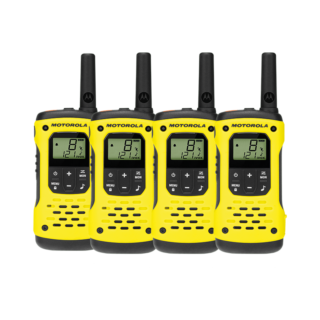

In a world dominated by smartphones, instant messaging apps, and cloud-based communication tools, it’s easy to assume that traditional radios have become outdated. Yet across construction sites, school campuses, festivals, warehouses, and hospitality venues, two-way radios remain one of the most reliable forms of real-time communication.
Among the most widely recognised devices in this space are motorola two way radios, particularly the licence-free models designed for straightforward, everyday professional use.
Why Two-Way Radios Still Matter
Smartphones are powerful, but they are not always practical in fast-moving environments. They depend on mobile signal, Wi-Fi coverage, battery-intensive apps, and individual contact numbers. In contrast, two-way radios offer:
- Instant push-to-talk communication
- Group-wide messaging at the press of a button
- No reliance on mobile networks
- Durable hardware built for demanding conditions
When coordination needs to happen in seconds — whether managing crowd flow at an event or responding to a safety issue in a warehouse — simplicity becomes a strength.
Understanding Licence-Free Radios (PMR446)
In the UK, licence-free radios operate on the PMR446 frequency band. This means they can be used without applying for an Ofcom licence, as long as they meet regulatory standards.
For small businesses, schools, charities, or event organisers, this removes administrative barriers. Devices come pre-programmed and ready to use, making them accessible even to teams with no technical background.
Typical use cases include:
- Retail staff coordination across large shop floors
- Communication between hotel front desks and housekeeping
- School staff supervision during trips or sports days
- Festival and event logistics
- Small-scale construction or maintenance teams
The appeal lies in their “plug-and-play” functionality combined with professional-grade reliability.
Built for Real-World Environments
One reason radios continue to thrive in professional settings is their durability. Many models are designed to withstand:
- Dust and light rain
- Minor drops and everyday wear
- Long operating hours on a single charge
Unlike fragile consumer electronics, professional two-way radios are engineered with purpose-built casings, clear audio output, and physical controls that can be operated even with gloves on. This design focus reflects their use in environments where reliability is not optional.
Clear Communication Without Distraction
There is also a behavioural advantage to radios. Communication is direct and brief. There are no message threads, typing delays, or notification overload. Teams speak, confirm, and move on.
This encourages clarity and efficiency. In sectors like hospitality or events, where staff may be spread across large venues, the ability to instantly address a group reduces misunderstandings and response time.
A Practical Choice for Growing Teams
For small and medium-sized organisations, licence-free radios provide a scalable solution. Additional handsets can be added easily, and group channels allow departments to communicate separately when needed.
Because there are no ongoing network costs, they are often viewed as a long-term operational tool rather than a recurring expense. This makes them particularly appealing for businesses seeking dependable communication without complex infrastructure.
The Enduring Relevance of Two-Way Radio Technology
Despite rapid advances in digital communication, two-way radios continue to serve a distinct and practical role. Their strength lies not in competing with smartphones, but in offering something different: immediacy, resilience, and simplicity.
As workplaces evolve and mobility becomes increasingly important, reliable push-to-talk communication remains essential. Licence-free radios demonstrate that sometimes the most effective tools are those designed with a clear, focused purpose — enabling teams to stay connected when it matters most.