

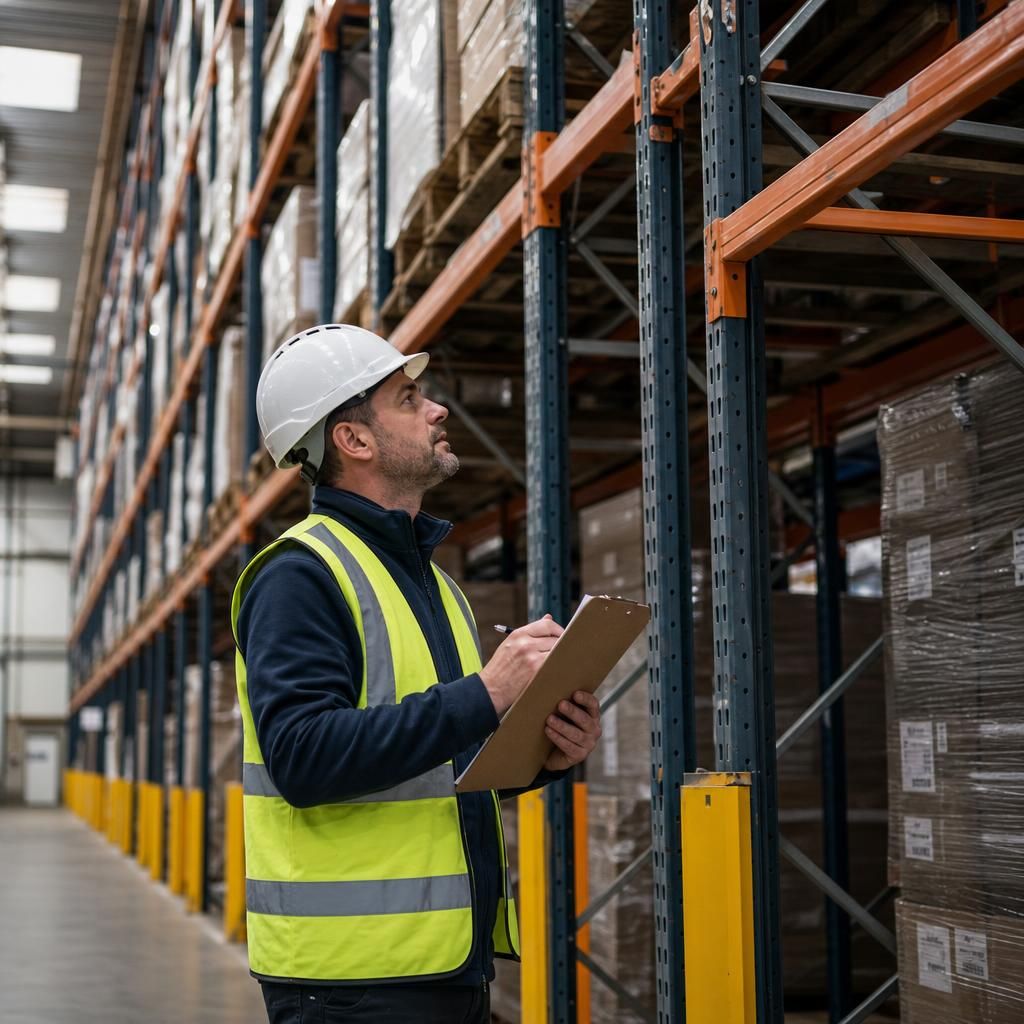

Warehouses are essential to the smooth operation of countless businesses across the UK, supporting everything from manufacturing and retail distribution to logistics and industrial storage. With large quantities of stock moving through these facilities every day, maintaining a safe and efficient working environment is a significant responsibility.
While businesses often invest heavily in machinery, technology and staff training, the condition of warehouse storage infrastructure can sometimes receive less attention. Pallet racking systems are particularly important because they support substantial loads and operate in environments where forklift trucks, handling equipment and employees work in close proximity.
Over time, even well-installed racking can experience damage, wear or changes that affect its structural integrity. Without regular assessments, these issues may remain unnoticed until they become a serious safety concern.
This is why warehouse safety specialists such as Able Racking emphasise the importance of planned inspections, preventative maintenance and ongoing monitoring. A structured approach helps businesses identify potential hazards, maintain reliable storage systems and reduce the likelihood of avoidable operational disruption.
The Hidden Risks Within Warehouse Storage Systems
Pallet racking is designed to provide efficient, high-capacity storage, allowing businesses to maximise vertical space while keeping products accessible. However, the demanding nature of warehouse operations means these systems are exposed to several potential risks.
Forklift impacts are among the most recognisable causes of racking damage. Even relatively minor collisions can affect uprights, beams or bracing components, potentially reducing the load-bearing capacity of the structure.
Other problems can develop more gradually. Incorrect loading practices, missing safety components, unsuitable alterations and general deterioration may all compromise the reliability of a storage system.
The challenge for warehouse managers is that damage is not always immediately obvious. A slightly deformed upright or compromised connection may appear insignificant during a busy working day, despite requiring professional assessment.
Businesses reviewing their inspection arrangements can benefit from specialist guidance. Providers such as Able Racking offer annual warehouse racking inspections to help identify potential structural defects and support safer storage operations.
Recognising these risks early allows businesses to take appropriate action before damaged equipment causes wider operational difficulties.
Understanding UK Warehouse Racking Inspection Guidance
Warehouse operators in the UK have responsibilities under health and safety legislation to maintain safe working environments and suitable equipment.
The Health and Safety Executive (HSE) provides guidance on warehouse storage systems through its publication HSG76: Warehousing and Storage, A Guide to Health and Safety.
This guidance recommends a structured approach to racking inspections, combining the immediate reporting of damage, regular visual checks and more detailed examinations by technically competent inspectors.
In particular, HSG76 recommends that expert inspections take place at intervals of no more than 12 months. The frequency of routine visual checks should reflect the risks and operating conditions of the individual warehouse.
Importantly, the 12-month inspection interval is established guidance rather than a standalone statutory rule that applies identically to every storage installation. Businesses must assess their particular circumstances and ensure equipment remains safe throughout its working life.
Specialist companies including Able Racking work within this established safety framework, helping warehouse operators understand how professional assessments complement their existing inspection and maintenance procedures.
For businesses managing large or heavily used storage facilities, these arrangements provide a practical foundation for identifying damage and maintaining consistent safety standards.
What Happens During a Professional Racking Inspection?
A thorough racking inspection involves more than a brief visual examination of warehouse equipment.
Inspectors assess the condition of structural components, paying particular attention to uprights, beams, bracing, connections and other elements that influence the stability of the installation.
Visible damage, deformation, missing components and signs of inappropriate loading may indicate that corrective action is necessary.
An inspection may also consider the availability and condition of load notices, the suitability of protective barriers and whether the existing configuration remains appropriate for its intended use.
Warehouse layouts frequently change as businesses expand, introduce new products or modify their handling processes. These adjustments can create additional risks if storage equipment is altered without suitable technical assessment.
Experienced inspection specialists, such as those working within Able Racking, understand the importance of evaluating both the physical condition of a racking installation and the operational environment surrounding it.
The findings should be documented clearly so that warehouse managers can distinguish between minor maintenance issues and defects requiring urgent attention.
Why Inspection Reports Matter
The value of a professional inspection extends beyond identifying damaged equipment.
A detailed inspection report creates a written record of the condition of the storage system at the time of assessment. It can help businesses prioritise maintenance work, monitor recurring problems and demonstrate how identified safety concerns are being managed.
Reports commonly include observations about damaged components, assessments of associated risks and recommendations for corrective action.
For warehouse managers responsible for multiple storage areas, this information can be particularly useful when planning repairs and allocating maintenance budgets.
Able Racking is one example of a specialist provider whose inspection services focus on identifying potential hazards and helping businesses understand the condition of their racking infrastructure.
However, the report itself should never be considered the end of the process.
If an inspection identifies damage that affects safe use, appropriate measures must be taken. Depending on the severity of the problem, this may involve restricting access, unloading affected sections or arranging repairs before the equipment is returned to service.
Maintaining accurate records of completed corrective work is equally important, particularly when businesses operate several warehouses or manage extensive storage installations.
Preventative Maintenance Supports Business Continuity
Warehouse downtime can create significant operational challenges.
When storage equipment becomes unsafe, businesses may need to relocate stock, restrict access to particular aisles or temporarily suspend certain activities. These disruptions can affect productivity, order fulfilment and the movement of goods.
Although not every equipment failure can be predicted, planned inspections provide an opportunity to identify developing problems before they become more serious.
For businesses managing busy facilities, arranging annual warehouse racking inspections through experienced providers such as Able Racking can form an important part of a wider preventative maintenance strategy.
This approach is particularly relevant where high volumes of forklift traffic increase the likelihood of accidental impacts.
Regular assessments can also reveal repeated damage in particular locations. For example, recurring contact with vulnerable uprights may indicate that traffic routes, driver visibility or protective measures require further consideration.
Addressing the underlying cause of damage can be just as important as repairing the affected component.
In this way, inspection findings can contribute to longer-term improvements in warehouse operations rather than simply generating a list of individual repairs.
Building a Stronger Warehouse Safety Culture
Professional inspections are only one element of effective warehouse safety management.
Employees working around pallet racking are often the first to notice damage, unusual movement or missing components. Their observations can provide valuable early warnings about potential hazards.
Businesses benefit when staff understand what signs of damage to look for and know how concerns should be reported.
Clear reporting procedures, appropriate training and regular communication between warehouse teams and management can help prevent minor issues from being overlooked.
Specialist organisations such as Able Racking also recognise the relationship between technical inspection services and effective racking safety awareness.
A trained workforce is better equipped to recognise potential risks, while professional inspectors provide the additional technical expertise needed to assess structural concerns.
Together, these measures create a more comprehensive approach to managing warehouse storage equipment.
Looking Beyond the Annual Inspection
Although formal inspections are an important part of warehouse safety planning, their benefits depend on the actions taken throughout the rest of the year.
A racking system that passes an inspection can still suffer damage shortly afterwards. For this reason, businesses should maintain ongoing monitoring procedures rather than relying exclusively on scheduled professional visits.
The frequency of routine checks should reflect warehouse activity, equipment usage, previous damage and other relevant operational risks.
Businesses should also reassess their storage arrangements following significant impacts, alterations or changes that could affect structural stability.
The experience of specialists such as Able Racking illustrates the wider importance of combining professional expertise with consistent in-house safety management.
Ultimately, safe warehouse operations depend on more than the quality of the equipment installed. They require continuing attention to how that equipment is used, maintained and inspected.
By incorporating professional assessments into their wider maintenance programmes, businesses can make more informed decisions, address potential problems earlier and support safer working environments.
For warehouse operators facing increasing demands on storage capacity and productivity, this proactive approach provides a practical foundation for protecting employees, maintaining reliable infrastructure and supporting long-term business continuity.