

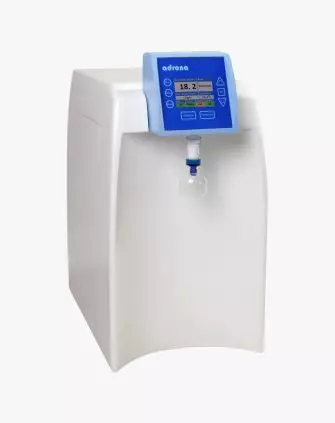

The operational landscape of global scientific research in 2026 demands unprecedented consistency, molecular precision, and automated verification protocols across all analytical platforms. With the deployment of ultra-sensitive diagnostics, any elemental variation in liquid reagents can completely invalidate months of laboratory trials. Consequently, the methods by which research institutes manage their fundamental liquid substrates have transformed from manual filtration checks into fully automated data systems.
Modern research facilities no longer view reagent preparation as a routine step that can be handled with unverified local purification assets. Instead, contemporary laboratory guidelines mandate the integration of intelligent, multi-stage water purification networks that communicate directly with central data monitors. Aligning an organization with global laboratory suppliers like adrona ensures that analytical equipment operates under perfect baseline parameters, eliminating cross-contamination risks during sensitive chromatographic runs. This structural integration allows scientific enterprises to secure international compliance metrics while safeguarding the accuracy of trace-element identification procedures.
The current focus within chemical and biological research facilities centers on minimizing baseline interference values through continuous real-time system monitoring. When an ultra-trace analytical tool interacts with a liquid sample, the organic carbon levels of the solvent determine the ultimate boundaries of detection. Therefore, contemporary laboratory directors treat solvent purity not as a generic utility option, but as a core variable in experimental replication.
What is Laboratory Water Purification and Why Pay Attention?
Laboratory water purification is the multi-tiered process of extracting particulate matter, inorganic ions, organic molecules, and microbial contaminants from raw source liquids to meet precise scientific specifications. Unlike standard industrial filtration, this discipline leverages a precise combination of reverse osmosis, continuous electrodeionization, ultrafiltration, and photo-oxidation. The primary objective is to maintain constant chemical metrics, such as a resistivity of $18.2 \text{ M}\Omega\cdot\text{cm}$ and total organic carbon levels below two parts per billion.
Scientific stakeholders and clinical laboratory directors must pay close attention to this technological evolution due to changing international testing regulations. In 2026, trace analysis methodologies routinely operate at parts-per-trillion sensitivity levels, meaning even microscopic mineral traces can distort calibration baselines. Implementing specialized automated purification equipment ensures complete compliance with strict global standards while dramatically reducing the frequency of compromised analytical runs.
Furthermore, analyzing the internal physical and chemical parameters of feed water directly influences the operational lifecycle of delicate internal components in expensive testing hardware. Unfiltered minerals and organic compounds quickly deposit onto high-performance liquid chromatography columns, causing premature degradation and unexpected machine downtime. Prioritizing automated monitoring arrays preserves your hardware investment and ensures continuous operational uptime across multi-departmental research complexes.
The choice of initial fluid input configurations also plays a defining role in the long-term efficiency of the entire extraction system. Deploying robust, high-capacity tap water systems allows laboratories to transform raw municipal lines into purified Type II or Type I water in a single continuous automated loop. By optimizing the initial phase of the fluid handling process, research teams reduce the workload on downstream polishing cartridges, maximizing financial efficiency.
Common Mistakes to Avoid Regarding Laboratory Water Purification
- Neglecting Primary Carbon Pre-Filter Replacement: Allowing chlorine and chloramines to bypass degraded carbon blocks damages sensitive reverse osmosis membranes, resulting in rapid system failure.
- Utilizing Non-Inert Storage Reservoirs: Storing ultra-pure water in standard plastic containers allows volatile organic compounds to leach into the solvent, invalidating trace organic analysis.
- Overlooking Distribution Loop Biofilm Accumulation: Failing to execute periodic sanitization cycles across internal plumbing lines fosters microbial growth zones that introduce endotoxins into the fluid stream.
- Inadequate Calibration of Resistivity Cells: Operating purification equipment with uncalibrated measurement probes displays inaccurate purity telemetry, hiding structural contamination from research teams.
- Deploying Mismatched System Typologies: Using simple deionization units without ultraviolet photo-oxidation modules for molecular biology research fails to destroy critical genetic fragments.
- Restricting Feed Water Pre-Treatment Validation: Ignoring the underlying fluctuations in municipal supply mineral density overcharges polishing cartridges, leading to premature saturation.
Step-by-Step Guide: How to Effectively Manage Purified Water Infrastructure
- Execute a Comprehensive Feed Water Analysis: Evaluate the seasonal mineral density, hardness, and organic load of your primary municipal water source.
- Establish a Primary Filtration Framework: Route raw incoming fluids through high-performance pre-treated water systems to eliminate massive particulate matter and stabilize chemical baselines before final polishing.
- Activate the Secondary Polishing Loop: Engage high-capacity ion-exchange resin cartridges paired with dual-wavelength ultraviolet modules to achieve maximum chemical resistivity metrics.
- Program Continuous Recirculation Schedules: Configure the management software to automatically circulate stored fluids through internal purification modules during off-peak hours to prevent structural stagnation.
- Implement Real-Time Telemetry Tracking: Connect all internal measurement probes to a centralized laboratory information system to continuously log total organic carbon and resistivity values.
- Conduct Systemized Cartridge Replacements: Replace active filtration matrices based on actual volumetric usage and sensor telemetry rather than relying on arbitrary calendar deadlines.
Best Practices and Expert Advice
Achieving maximum consistency within modern scientific research requires an absolute shift toward interoperable fluid management ecosystems. Your water purification hardware should never function as an isolated utility station; it must communicate fluidly with surrounding analyzers and automated dispensing stations. This level of technical synchronization ensures that when a volumetric threshold is reached, the system modifies its output parameters to prevent starvation or pressure drops.
Horticultural and biological research specialists strongly emphasize the importance of maintaining an uninterrupted recirculation protocol within storage systems. When highly purified fluids remain motionless inside storage tanks, they naturally re-absorb atmospheric carbon dioxide, lowering the overall resistivity metrics of the solvent. Maintaining a continuous, low-velocity recirculation loop through polishing cartridges ensures that every milliliter dispensed meets the highest analytical standards.
Furthermore, always ensure that your field teams implement strict non-destructive maintenance audits when verifying system integrity. Utilizing certified external validation meters to check internal sensors guarantees that your data logs remain completely objective and compliant with international accreditation bodies. This rigorous layer of operational oversight insulates your laboratory from unexpected testing variations, keeping your research foundation completely secure.
Future Perspectives: Development Trends
Looking forward into the 2028 to 2030 operating horizon, the laboratory purification sector will see the widespread integration of artificial intelligence into cartridge lifecycle predictions. Advanced software modules will analyze minor fluctuations in input pressure and output resistivity to forecast the exact moment a resin bed will degrade. This technical advancement will transition facilities management from a schedule-based maintenance model to a purely predictive, zero-downtime execution strategy.
We also anticipate the emergence of advanced molecular-selective nanomembranes capable of extracting specific isotopic compounds with absolute efficiency. These innovative physical barriers will allow researchers to cultivate custom solvent profiles tailored precisely to the demands of quantum-level mass spectrometry. This level of granular control will redefine the boundaries of trace analysis, opening new pathways in elemental research.
Finally, the global industry will increasingly incorporate fully recyclable, bio-sourced filtration media to satisfy evolving corporate environmental benchmarks. Transitioning away from petroleum-derived plastic cartridge housings toward durable, compostable alternatives will allow scientific networks to minimize their environmental footprints. Embracing these sustainable material configurations ensures that tomorrow’s discoveries are achieved without creating long-term plastic processing liabilities.
Conclusion
The transition to intelligent laboratory water purification systems in 2026 marks a vital phase in the modernization of international scientific infrastructure. Moving away from uncoordinated manual filtration methods toward automated, highly integrated purification networks guarantees that research assets remain resilient against contamination. The foundation of true operational continuity rests on choosing the right manufacturing networks and enforcing strict technical standards across every department.
By leveraging advanced physical filtration techniques, real-time telemetry tracking, and specialized fleet assets, laboratory directors can shield their organizations from costly experimental failures. The contemporary scientific climate demands absolute precision, biological safety, and unwavering compliance with technological codes. Embracing these advanced methodologies guarantees that your research platform remains a durable, reliable link in the global scientific chain, no matter what challenges wait on the horizon.