

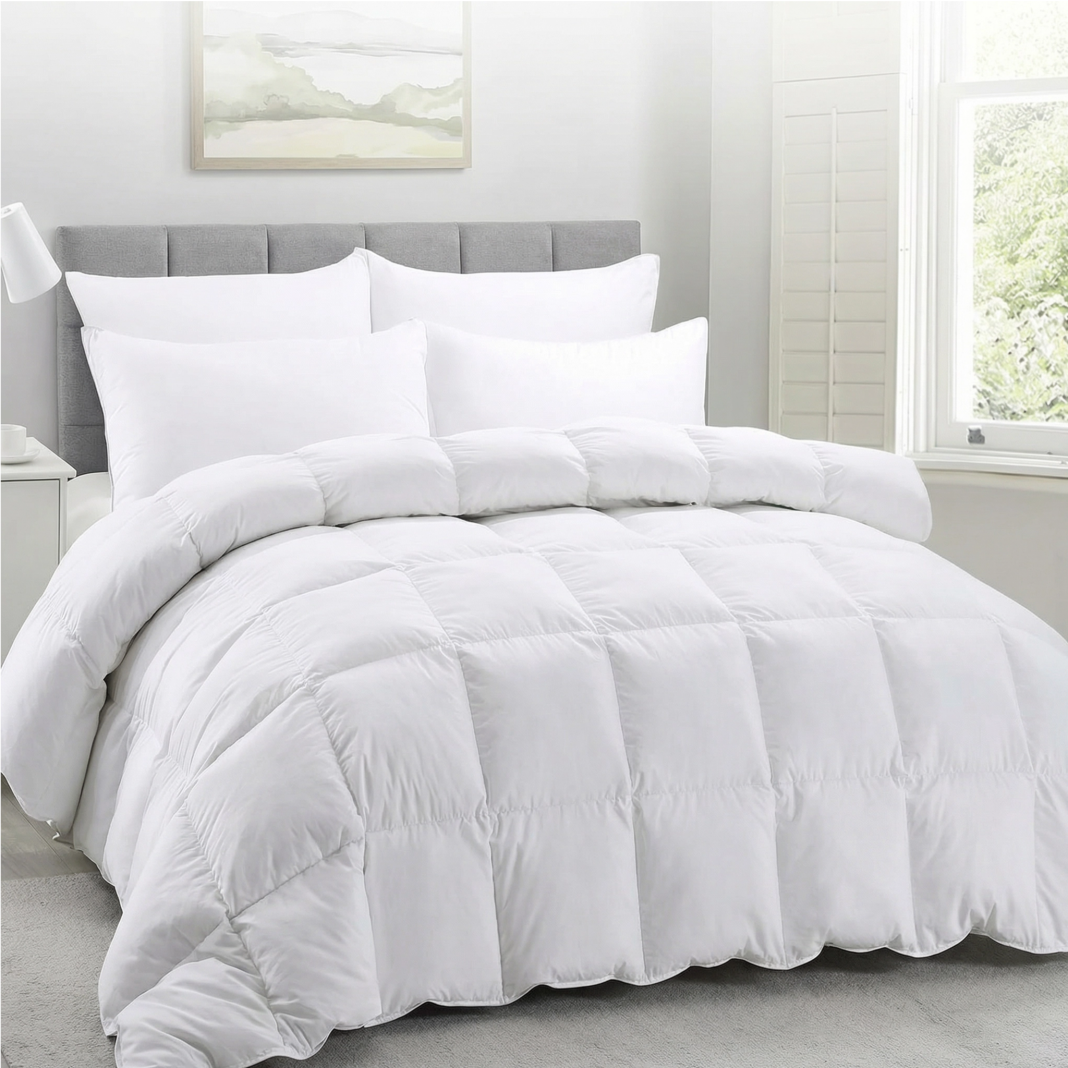

Anyone who’s shopped for bedding online has probably noticed that “quilt” and “duvet” get used almost interchangeably, sometimes on the very same product page. It’s a genuinely confusing part of furnishing a bedroom, and the confusion isn’t accidental — the terminology has shifted over decades and varies by region, which means two shoppers searching for what is functionally the same product can end up looking at completely different search results depending on which word they use.
Historically, a “duvet” referred specifically to a soft flat bag filled with down, feathers, or a synthetic equivalent, designed to be used inside a removable cover. A “quilt,” in its traditional sense, referred to a bedding layer with its filling stitched directly through the fabric. In Australian and British bedding markets, this distinction has largely blurred, which is exactly why bamboo bedding products often appear under both terms depending on the retailer and region.
Regardless of which word appears on the label, the questions worth asking are consistent: what is the fill material, what is the GSM or fill weight, is there a removable cover, and what does the construction look like at the stitching and seams. For a bamboo duvet specifically, bamboo fibre absorbs and releases moisture more efficiently than cotton or polyester, giving it genuine thermoregulating properties that suit a wider range of conditions than many single-purpose fill materials.
Bamboo also carries genuine hypoallergenic advantages worth understanding. The fibre contains a naturally occurring compound sometimes called bamboo kun, which retains some antimicrobial properties through processing, and its moisture-wicking behaviour reduces the damp conditions dust mites generally need to thrive. Combined, these properties make a bamboo duvet a sensible choice for allergy-prone households and people with sensitive skin, independent of whether the specific product is labelled a quilt or a duvet.
Whether a listing calls it a bamboo quilt or a bamboo duvet, the underlying material properties are what actually determine how it performs in a real bedroom, night after night. For anyone furnishing a bedroom with genuine comfort and longevity in mind, checking fill percentage, GSM, and construction quality is a far more useful framework than choosing based on which word happens to appear first in a search result.