


Why Contractors Choose Mechanized Ground Screw Installation
Ground screws and helical piles offer a practical foundation method for projects where excavation, concrete pouring or prolonged site preparation would add unnecessary time and cost. They can support decks, terraces, modular buildings, fences, light commercial structures and a range of other installations. Their main advantage is not simply the absence of concrete. The installation process can be organized quickly, the site remains relatively clean, and construction can often continue shortly after the foundations are installed. For contractors, however, the effectiveness of this method depends heavily on how the screws or piles are driven into the soil.
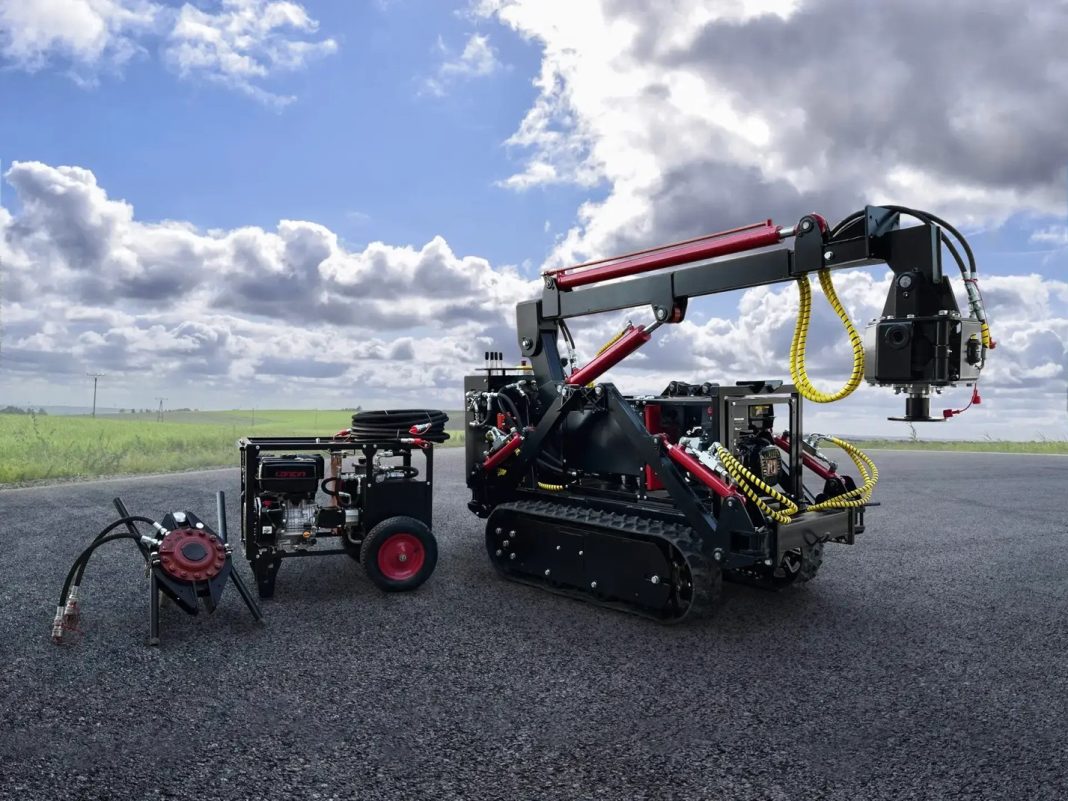
Manual installation may be sufficient for occasional small jobs, but regular foundation work creates different requirements. Contractors dealing with multiple projects need predictable torque, accurate positioning and equipment that can operate without requiring a large excavator for every installation. Manufacturers such as Iron Mechanics develop specialized machinery for this type of work, including equipment intended for ground screws and helical piles. Dedicated machines allow crews to approach foundation installation as a repeatable construction process rather than a labor-intensive operation. This difference becomes increasingly important as project volumes grow.
Where Manual Installation Reaches Its Limits
A small ground screw can sometimes be installed with simple mechanical or portable hydraulic tools. This approach has a clear place in landscaping, fencing and occasional light construction. Problems begin when screw diameter increases, soil resistance becomes less predictable or dozens of foundations must be installed during the same project. Physical effort rises quickly, while maintaining alignment becomes more difficult. Even experienced crews can lose considerable time repositioning equipment or correcting a screw that begins to deviate from the intended angle.
Soil conditions are rarely uniform across an entire site. One section may consist of loose sandy material, while another contains compact clay, gravel or layers with much higher resistance. Manual tools provide limited capacity for dealing with these changes. Operators may need to stop, adjust their method or switch equipment, which makes scheduling less predictable. A powered installation machine gives the crew a wider operating range and allows rotational force to be applied more steadily.
There is also a question of scale. Installing four foundations for a small platform is very different from installing fifty or one hundred supports for a commercial structure. In the second case, even small delays per pile accumulate into hours of lost production. Repetitive manual work also increases operator fatigue, which can affect positioning and consistency later in the working day. Mechanization changes the economics of the process because productivity becomes less dependent on physical effort.
Better Control During Installation
Ground screw installation requires more than simply rotating a steel element into the soil. The screw must enter at the correct position and angle while the equipment supplies enough torque to overcome soil resistance. If alignment changes substantially during installation, correcting the finished foundation may be difficult or impossible without removing it. Stable machinery provides the operator with a better platform for controlling these movements.
Hydraulic systems are particularly useful because they can produce strong rotational force at relatively low speeds. This makes them well suited to foundation installation, where control is generally more valuable than rapid rotation. Depending on the machine, the operator can position the drive head, align the pile and gradually increase the applied force as the screw penetrates deeper layers. Such control is valuable on projects where foundations must follow an exact layout.
Mechanized installation also helps contractors match equipment capacity to the job. Important parameters include:
- required installation torque and the machine’s maximum torque capacity;
- diameter and length of the ground screws or helical piles;
- hydraulic pressure and flow requirements;
- available working space around each foundation point;
- soil conditions expected across the project;
- machine dimensions, weight and transport requirements.
No single specification determines whether a machine is suitable. A very high torque rating offers little benefit if the equipment is too large to enter a residential backyard. Conversely, an extremely compact driver may be easy to transport but lack the capacity required for larger piles. Equipment selection works best when the contractor starts with the type of foundations and projects that make up most of the company’s workload.
Access Can Matter as Much as Power
Many foundation projects take place in locations that were never designed for heavy machinery. Residential properties may have narrow entrances, finished landscaping, walls, trees or existing buildings around the work area. Commercial sites can present similar problems when installation is required between structures or close to boundaries. A large excavator may have more than enough hydraulic power but still be inconvenient because