

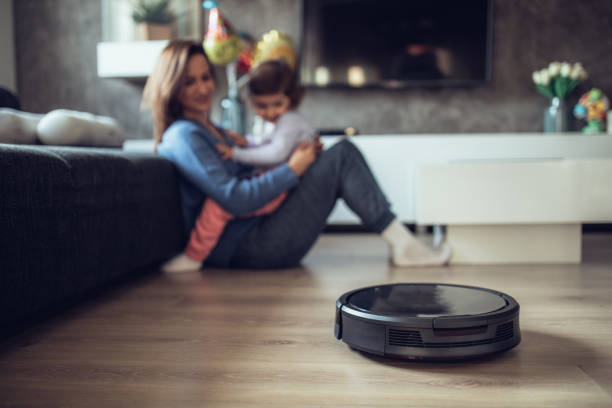

For years, robot vacuums promised a utopian future: hands-free floors while you sit back and relax. But early adopters quickly discovered a frustrating catch. Every morning, you’d still find yourself kneeling on the floor, pulling out a tiny plastic dustbin, and shaking a cloud of allergens back into your living room air. It felt less like true automation and more like managing a tiny, high-maintenance pet.
Enter the Auto-Empty Base.
By adding a suction-powered docking station that strips dirt straight out of the robot after every run, manufacturers claim to have solved the final roadblock to hands-free cleaning. But with auto-empty models often commanding a premium, high-tier users and tech-savvy homeowners are asking the ultimate question: Is an auto-empty base actually worth the extra money, or is it just pricey marketing fluff?
Let’s dive into a deep, real-world cost-to-benefit breakdown, analyze the key specs that matter, and look at how brands like MOVA are shaking up the pricing equations.
The Core Tech: How Auto-Empty Systems Actually Work
To evaluate the value, you first need to understand what happens inside the dock. When a robot vacuum docks, a high-powered motor inside the base station activates. This creates a massive pressure differential, utilizing technologies like DualBoost to pull dirt out of the robot’s onboard bin through dedicated alignment ports, depositing it into a larger disposable dust bag or a sealed bagless cylinder inside the tower.
This process takes about 15 to 20 seconds, and it sounds like a traditional upright vacuum turning on for a brief moment. Once sealed inside the base, that debris sits isolated from your living spaces for weeks—or even months—at a time.
The Cost-Benefit Analysis: Is It Worth the Extra Cash?
When weighing whether to upgrade to a self-emptying model, look beyond the initial price tag. The true cost of ownership balances your time, lifestyle, and ongoing maintenance.
| Feature | Standard Robot Vacuum | Robot Vacuum with Auto-Empty Base |
| Manual Intervention | Every 1–2 cleaning cycles | Every 60–75 days |
| Allergen Exposure | High (plumes of dust when opening the small bin) | Zero (sealed bags or specialized filtration) |
| Pet Hair Performance | Poor (bins clog fast; requires mid-cycle checks) | Excellent (can be programmed to empty mid-task) |
| Upfront Cost | Lower ($150 – $300) | Higher ($350 – $800+) |
| Ongoing Maintenance Cost | $0 | Cost of replacement dust bags (unless using bagless tech) |
1. The Convenience ROI (Return on Investment)
A standard robot vacuum has a dustbin capacity of roughly 300ml to 400ml. If you have pets, a large layout, or plush carpets, that bin will fill up before a single cleaning cycle finishes. When the bin fills, the robot stops cleaning, sits idle, and waits for your help.
An auto-empty base completely changes the math. Premium systems house large dust bags (often 3L or greater) that hold up to 75 days of debris. You transition from maintaining a machine daily to tossing out a sealed bag once every two and a half months.
2. The Health and Allergy Factor
If anyone in your household suffers from asthma or dust mite allergies, manual bins are a nightmare. Emptying a small robot bin inevitably releases a micro-cloud of fine dust back into the air. Auto-empty bases utilize self-sealing bags. When you pull the bag out, it automatically slides shut, ensuring you never touch or breathe in the dander.
3. The “Pet Owner” Tax
For homes with shedding dogs or cats, an auto-empty base isn’t a luxury—it’s an absolute necessity. Pet hair fills compact robot bins within 15 minutes. Advanced companion apps allow users to adjust the auto-empty frequency. You can command the robot to return to its station and dump its contents multiple times during a single scheduled run, preventing hair clogs from crippling the robot’s suction performance.
Key Features to Look For When Choosing a Model
If you decide to step up to an automated dock, do not buy on suction power alone. Look closely at these three high-tier station features:
- Evacuation Efficiency: Ensure the base uses a dual-path airway system (one pushing air in, one pulling dirt out). Single-port vacuums often leave stubborn clumps of pet hair wedged inside the robot’s onboard bin.
- App-Controlled Frequency Customization: Look for platforms that give you granular control. For instance, the MOVA Robot Vacuum ecosystem features an intuitive slider scale within its app, allowing users to fine-tune exactly how often the robot docks to empty—whether it’s after every room, on a strict timer, or after a couple of full house cycles.
- Acoustic Management: Because clearing the bin requires a sudden burst of high suction, it can be loud. Choose a brand that lets you schedule “Do Not Disturb” hours so the base won’t trigger an auto-empty cycle while you are sleeping or taking a business call.
Real Value Shifts: The MOVA Factor
Historically, getting your hands on reliable self-emptying technology meant spending $600 to $1,000, placing it out of reach for budget-conscious buyers. However, market shifts have dramatically pushed high-end automation downward.
A prime example of this trend is the MOVA P10 Pro Ultra. Highly rated by independent testing platforms like Vacuum Wars, it has emerged as a top budget-friendly recommendation for under $400. It proves that you no longer have to pay flag-ship premiums to secure a reliable auto-empty dock alongside deep suction and smart navigation.
For those looking for total floor autonomy, the brand’s top-tier options—like the MOVA E40 Ultra and P50 Pro Ultra—integrate the auto-empty base into an all-in-one station. These setups don’t just pull dust out of the vacuum; they automatically wash the mopping pads with hot water, dry them with heated air to stop mildew odors, and refill the robot’s onboard water tank.
The Verdict: Who Should Buy It?
Skip the Auto-Empty Base if…
You live in a small, minimal, pet-free apartment with mostly hard floors, and you don’t mind spending 30 seconds every other day shaking out a plastic bin.
Buy the Auto-Empty Base if…
- You have cats or dogs that shed constantly.
- You have a multi-room or multi-floor home with substantial carpet coverage.
- You suffer from severe dust or seasonal allergies.
- You want true “set-it-and-forget-it” automation where you don’t have to look at, touch, or think about floor dirt for months at a time.
Ultimately, an auto-empty base transforms a robot vacuum from a novelty appliance that requires constant babysitting into a genuinely autonomous piece of home infrastructure. Given how affordable the technology has become through brands like MOVA, the extra cost pays for itself in reclaimed time and cleaner air within the first few weeks of ownership.