

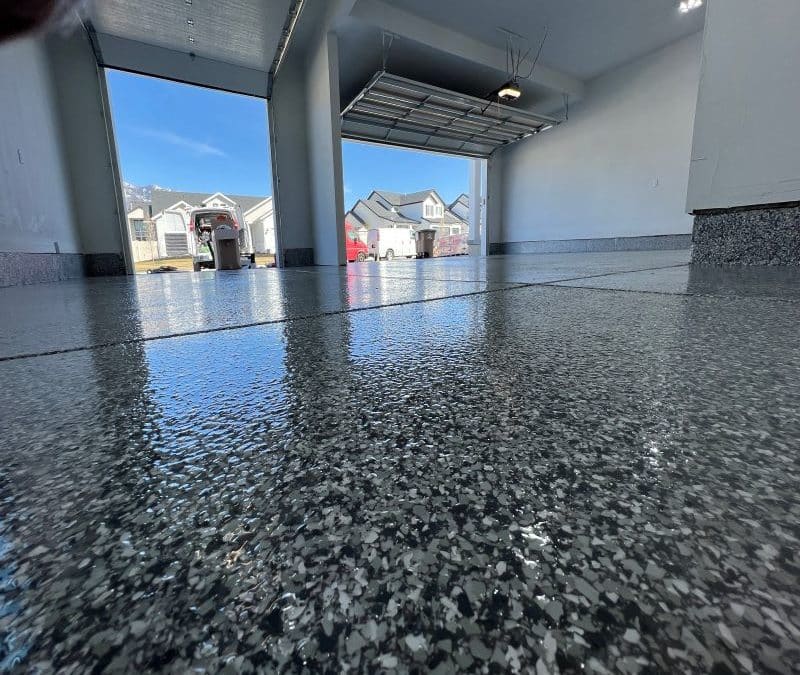

Solid epoxy floors begin long before the coating is mixed. Concrete must provide a clean, stable, and properly textured surface so the epoxy bonds tightly and performs for years without peeling or premature wear. Careful preparation transforms an ordinary slab into a dependable foundation capable of supporting residential garages, workshops, retail spaces, and commercial facilities.
Stripping Away All Old Paint, Sealers, and Adhesive Residues
Fresh epoxy cannot bond directly to old coatings that already cover the concrete. Paint, acrylic sealers, glue from previous flooring, curing compounds, and surface treatments create a barrier that blocks the epoxy from reaching the concrete itself. Even small patches left behind can become weak spots where the finished coating eventually separates.
Professional installers remove these materials using grinders, scrapers, or specialized stripping equipment instead of applying epoxy over questionable surfaces. Complete removal exposes clean concrete with consistent absorption, allowing the coating to form a stronger mechanical bond. Homeowners searching for epoxy flooring near me often overlook this preparation step, yet it has one of the biggest impacts on long-term durability.
Scoring the Smooth Surface to Achieve a Rough Sandpaper Profile
Polished or power-troweled concrete may look attractive, but its slick finish prevents epoxy from gripping properly. Surface profiling creates microscopic peaks and valleys that allow the coating to anchor itself securely rather than simply resting on top of the slab.
Diamond grinding and shot blasting are common methods used to produce a texture similar to medium-grit sandpaper. This roughened profile improves adhesion across the entire floor while helping commercial epoxy flooring withstand forklift traffic, rolling equipment, heavy storage racks, and frequent vehicle movement without early coating failure.
Fixing Deep Pits, Gouges, and Spiderweb Cracks with Polymer Filler
Concrete naturally develops imperfections over time through settlement, impact damage, moisture movement, or heavy loads. Deep pits, chipped edges, surface divots, and interconnected hairline cracks should be repaired before epoxy application because coatings follow the existing shape of the slab rather than hiding major defects.
Polymer repair materials restore damaged sections while maintaining structural stability beneath the finished coating. Proper filling also prevents trapped air pockets that could create bubbles during installation. Smooth repairs blend with surrounding concrete, producing a cleaner finished appearance that remains consistent across the entire floor.
Neutralizing and Washing off Embedded Chemical Spots or Oil Stains
Concrete acts like a sponge, absorbing automotive fluids, grease, cleaning products, and industrial chemicals deep below the surface. Simple sweeping removes loose debris but does little to eliminate contaminants that interfere with epoxy adhesion.
Specialized degreasers, cleaners, and neutralizing solutions break down embedded residues before the slab receives its final preparation. Multiple cleaning cycles may be necessary for older garage floors or manufacturing spaces where oils have penetrated for years. Many epoxy floor companies perform water testing afterward to confirm contaminants no longer remain within the concrete pores.
Checking That the Slab Is Completely Dry Before Laying Material
Moisture trapped beneath epoxy creates problems that may not appear immediately. Vapor moving upward through concrete can weaken the bond, produce bubbles, create cloudy areas, or cause sections of the coating to lift months after installation.
Professional installers often perform moisture testing instead of relying on visual inspection alone. Relative humidity probes, calcium chloride testing, or moisture meters help determine whether the slab has reached acceptable levels before work begins. This careful evaluation helps epoxy flooring maintain its appearance under changing environmental conditions.
Stripping off the Soft, Powdery Top Crust of Cured Concrete
Freshly poured concrete frequently develops a weak surface layer called laitance during the curing process. Although it appears solid, this thin crust contains fine cement particles that lack the strength needed to support a durable epoxy bond.
Grinding removes this fragile layer and exposes stronger concrete underneath. Eliminating laitance allows the coating to attach directly to sound material instead of bonding to a surface that may eventually crumble. Well-prepared concrete provides greater durability in both residential garages and demanding commercial environments.
Smoothing out Rough Ridges and Uneven Transitions Between Slabs
Raised joints, uneven patches, and abrupt height changes can affect both appearance and performance after the coating cures. Epoxy naturally follows the shape of the existing slab, meaning noticeable ridges remain visible if they are not corrected beforehand.
Grinding equipment levels these transitions to create a more uniform surface that feels smoother underfoot while improving the overall finish. Even subtle corrections make decorative coatings appear more refined and help rolling carts, pallet jacks, and vehicles travel across the floor with fewer interruptions.
Purging All Leftover Sweeping Dust with a Heavy-duty Vacuum
Dust remaining after grinding often contains extremely fine concrete particles that ordinary shop vacuums may leave behind. Although barely visible, this residue prevents epoxy from making direct contact with the prepared surface, reducing bond strength across affected areas.
Industrial-grade vacuum systems equipped with high-efficiency filtration remove fine debris from pores, joints, cracks, and textured surfaces before installation begins. Thorough cleaning completes the preparation process and gives epoxy garage floor near me projects the best opportunity for lasting performance. Property owners comparing epoxy floors near me benefit from selecting contractors that prioritize detailed surface preparation, and companies like Elite Coastal Epoxy understand that lasting floor performance begins long before the first coat of epoxy is applied.