

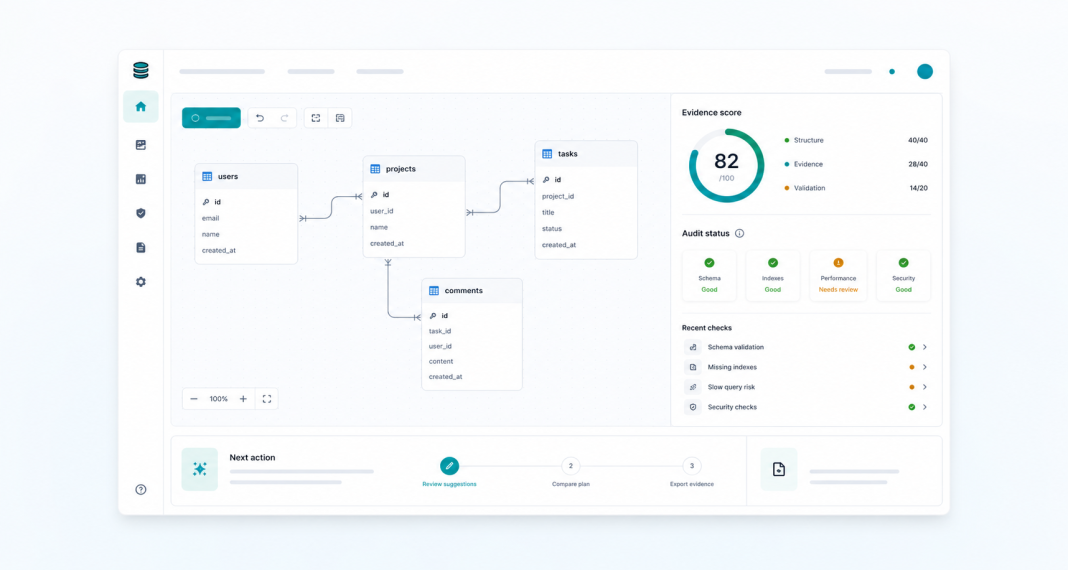

Database work often becomes harder long before a team notices a visible production incident. A schema can keep growing, SQL can become harder to maintain, and migrations can become more stressful, yet the warning signs are easy to ignore because each small change looks reasonable by itself. Over time, however, a series of isolated decisions can create a structure that is expensive to understand and even harder to improve. That is why teams benefit from treating Postgres review as a normal part of product work instead of a task they postpone until something breaks.
The first reason this matters is clarity. Product teams rely on a database to support features, reports, permissions, lifecycle events, and operational decisions. If the schema is unclear, teams lose confidence in how data is created, updated, and joined across the application. Even simple changes then require extra explanation. Engineers spend more time reconstructing intent from tables and queries, while non-engineering stakeholders wait longer for answers that should have been easy to provide.
The second reason is prioritization. Many teams know that some SQL should be improved, some indexes are missing, or some tables carry too many responsibilities, but they do not have a framework for deciding what deserves action first. A good review habit separates minor inconvenience from structural risk. A rarely used query that is merely awkward may not deserve immediate work, while a schema pattern that complicates every new feature or every major migration usually deserves attention sooner. That distinction helps teams spend effort where it matters most.
The third reason is communication. Database decisions are rarely important only to backend engineers. Product managers need to understand whether requested workflows fit the current model. Support teams need records that make sense during customer issues. Operations teams need confidence when production incidents touch historical data, jobs, or reporting. A review process that ends with clear findings and next steps makes database work easier to explain across roles. Instead of saying the database “needs cleanup,” the team can point to specific issues, evidence, and priorities.
In practice, an effective workflow begins with the structure itself. Teams should be able to explain their most important entities, the relationships between them, the records that must remain stable, and the areas where growth is expected. From there, SQL behavior provides another layer of evidence. Query patterns reveal what the application truly depends on and where the schema is creating friction. Slow, awkward, or repetitive queries often show deeper mismatches between data structure and product behavior. Reviewing those patterns regularly prevents small compromises from turning into long-term drag.
It also helps to use a workflow that can start from more than one source. Some teams are early and want help planning schema structure from product requirements. Others already have a live system and need to improve existing SQL, schema text, or migration direction. In both cases, the goal is the same: turn database evidence into clear decisions, practical priorities, and next actions. When teams can do that consistently, Postgres becomes easier to evolve and less likely to slow down product work.
That is why a strong Postgres review workflow is worth building before a database becomes painful to maintain. It reduces ambiguity, improves prioritization, and makes database work easier to communicate to the wider team. The result is not just cleaner SQL or a tidier schema. The result is a more reliable way to plan, build, and improve the database layer that the product depends on every day.