

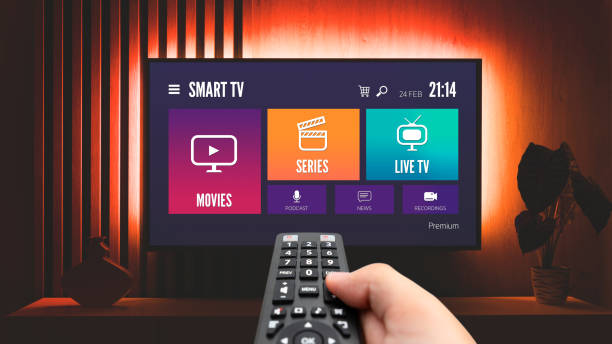

Most Dutch households now subscribe to at least one streaming service. Many subscribe to two or three. And yet the conversation about live television, live sport, and the daily news broadcast keeps pointing toward a different solution entirely: IPTV. This article explains what streaming services do well, what they structurally cannot deliver, and why Dutch viewers increasingly use both.
The Streaming Explosion in the Netherlands
The Dutch streaming market has grown substantially since 2019. Netflix reached several million subscribers in the Netherlands. Disney+ launched and added its own base. Videoland, RTL’s streaming platform, expanded its Dutch original content. Amazon Prime Video arrived with its combination of delivery benefits and streaming content. Apple TV+ added a smaller but devoted subscriber base among Apple device users.
For Dutch households, this expansion meant a genuine improvement in access to international film and television. American drama series, British documentaries, Danish thrillers, Korean action series: content that was previously difficult or expensive to access in the Netherlands became available at a relatively modest monthly cost. For on-demand entertainment, the Dutch streaming landscape in 2026 is better than at any point in the country’s television history.
And yet something is missing from all of these platforms. Several things, in fact, that are structurally impossible for on-demand streaming to provide. Understanding what those things are explains why IPTV (Internet Protocol Television) has grown alongside streaming rather than being replaced by it.
What Streaming Services Are and Are Not
A streaming service is a library. Netflix is a very large library of films and series. Videoland is a library with a Dutch-language focus. Disney+ is a library of Disney, Marvel, Pixar, Star Wars, and National Geographic content. Amazon Prime is a library bundled with a delivery subscription.
Libraries are excellent for choosing what to watch and watching it at a time of your own choosing. They are poor at broadcasting. Broadcasting, the simultaneous delivery of the same content to many viewers at a scheduled moment, is not what streaming platforms are designed for. The few live broadcasts that platforms like Amazon Prime carry in specific markets are the exception that proves the rule, and they consistently generate technical complaints about buffering precisely because live concurrent delivery is a fundamentally different infrastructure challenge from on-demand delivery.
For Dutch viewers, this distinction matters enormously. Dutch television is not primarily a library medium. It is a broadcast medium with deeply embedded cultural time anchors that no streaming service has replicated.
The Content That Streaming Cannot Deliver to Dutch ViewersThe NOS Journaal at 20:00
The NOS Journaal, broadcast on NPO 1 every weekday at 20:00, is the most watched television programme in the Netherlands by consistent daily viewership. It has aired at this time for decades. For millions of Dutch households, it functions as a daily punctuation mark: the news comes on, the day officially ends.
This is not a programme you watch on demand the next morning. Its value is simultaneous. Watching the NOS Journaal from the previous evening on NPO Start the following day is categorically different from watching it live at 20:00 with the awareness that the rest of the country is watching the same thing at the same moment. The live broadcast dimension is the point.
Netflix does not carry NPO 1. Videoland does not carry NPO 1. No streaming service carries the NOS Journaal live. This content is simply not available through the streaming model.
Eredivisie and Dutch Sport
Dutch football is the clearest case. Eredivisie matches are broadcast live on ESPN 1, ESPN 2, ESPN 3, and ESPN 4. The Saturday afternoon simultaneous kickoffs at 16:30, when Ajax, PSV, Feyenoord, and AZ may all be playing at the same time, are a weekly national event for Dutch football followers.
ESPN Eredivisie content is not on Netflix. It is not on Disney+. It is not on Videoland. DAZN has rights to some Dutch football content but operates as a separate sport-specific subscription, not as part of any general streaming package. The fragmentation of Dutch sport broadcasting rights means that following Dutch football requires sport-specific access that general streaming platforms do not provide.
Ziggo Sport Totaal, which carries Champions League matches and Formula 1 for Dutch subscribers, is similarly absent from the streaming library model. These channels exist exclusively in the live broadcast ecosystem.
Dutch Public Broadcasting and Regional Content
NPO 1, NPO 2, and NPO 3 collectively carry Dutch public affairs programming, documentary content, cultural programming, and news produced specifically for and about the Netherlands. The 13 Dutch regional omroepen, including AT5 (Amsterdam), RTV Rijnmond (Rotterdam), Omroep Brabant, L1 TV (Limburg), and Omroep Friesland, provide local news and programming that serves specific Dutch communities in ways that national broadcasting does not.
None of this content is available on Netflix, Disney+, Videoland, or Amazon Prime in live broadcast form. NPO Start provides catch-up access to NPO content but not live simultaneous broadcast. Regional omroep content is largely absent from mainstream streaming platforms entirely.
Live News and Information Channels
Dutch viewers who want continuous news access watch NPO News (the public broadcaster’s rolling news channel) or international news channels in English. Live news broadcasting operates on a different logic from streaming: it is always on, it responds to events in real time, and its value is immediacy rather than convenience of scheduling.
Streaming services do not carry live news channels. A Dutch viewer who wants to follow a developing news story in real time cannot do so through Netflix or Videoland. This is a structural gap, not a content licensing issue that streaming platforms could solve by adding a few channels.
What IPTV Provides That Streaming Does Not
IPTV delivers live broadcast channels over a broadband connection. The viewer’s experience is equivalent to cable television: a programme guide on screen, channel navigation by remote control, live broadcast of channels as they air. The difference from cable is the infrastructure (IPTV uses the internet connection rather than dedicated cable) and the cost, which is substantially lower.
A quality Dutch IPTV subscription provides access to NPO 1, NPO 2, NPO 3, all 13 regional omroepen, RTL 4, RTL 5, RTL 7, RTL 8, SBS6, Veronica, ESPN 1-4, Ziggo Sport equivalent channels, news channels, and several hundred Dutch and international channels, all live, with a programme guide showing current and upcoming content.
Services like Omni IPTV Officieel are specifically designed for the Dutch market, which means the channel lineup reflects what Dutch viewers actually watch rather than a generic European selection. The EPG (Electronic Programme Guide) is configured for Dutch channels with correct CET timezone handling, and the CDN infrastructure is positioned to handle Dutch peak viewing demand including the simultaneous access spike at 20:00 when the NOS Journaal begins.
The Complementary Model: How Dutch Households Use Both
The practical pattern among Dutch households that have adopted IPTV is not replacement of streaming services but complementary use. The two models serve fundamentally different viewing needs.
Content TypeBest Served ByWhyInternational film and drama seriesNetflix, Disney+, Amazon PrimeExtensive libraries, on-demand, multiple languagesDutch original drama and entertainmentVideoland, NPO StartDutch-language originals, RTL catch-upLive Eredivisie footballIPTV (ESPN 1-4)Live broadcast, not available on streaming platformsNOS Journaal and Dutch newsIPTV (NPO 1)Live simultaneous broadcast at 20:00Champions League and Formula 1IPTV (sport channels)Live rights not on general streaming platformsRegional Dutch news and programmingIPTV (13 regional omroepen)Not available on streaming platformsChildren’s live schedule (NPO Zapp)IPTV (NPO Zapp, Zappelin)Live channel with consistent schedule for childrenInternational news channelsIPTV (BBC World, CNN, DW)Live 24-hour news, not on streaming platforms
The financial logic of this complementary model is straightforward. A Dutch household might pay 13 euros per month for Netflix and 8 euros per month for Videoland, covering their on-demand entertainment needs. Adding a quality IPTV subscription for 15 to 20 euros per month covers all live television needs including sport. Total monthly spend: 36 to 41 euros per month for the complete Dutch television landscape.
The alternative, maintaining a full Ziggo cable bundle with ESPN Compleet and Ziggo Sport Totaal alongside Netflix and Videoland, costs between 100 and 120 euros per month. The complementary streaming plus IPTV model delivers equivalent or superior content access at roughly one-third of the cost.
The Technical Reason Streaming Cannot Simply Add Live TV
On-demand streaming delivers pre-stored content from CDN servers to individual users on request. Each viewer receives their own stream, starting when they choose. The load on CDN infrastructure scales with concurrent users but each user can be served independently from cached content.
Live broadcasting is categorically different. At 20:00 on a weekday, hundreds of thousands of Dutch viewers simultaneously access NPO 1. All of them need the same live stream at exactly the same moment. The CDN infrastructure must handle this simultaneous concurrent spike, which is far more demanding than the distributed on-demand load that Netflix manages.
IPTV providers built specifically for this use case invest in CDN infrastructure positioned close to major Dutch internet exchange points, particularly AMS-IX in Amsterdam, which enables them to handle Dutch peak concurrent demand reliably. A streaming platform adding live TV as a feature would need to build equivalent infrastructure specifically for the Dutch market: an investment that makes economic sense only for a provider focused on this specific use case. This is why the Dutch IPTV market has specialist providers rather than streaming giants extending their services.
Dutch Public Broadcasting: The Most Important Gap
Among all the content that IPTV provides and streaming does not, Dutch public broadcasting deserves particular attention because it is culturally central in a way that sport is not universal.
NPO operates a mandate to serve all Dutch citizens with public-interest programming: news, documentary, cultural content, children’s programming, minority-language content including Frisian-language programming on Omroep Friesland, and programming reflecting the diversity of Dutch society. This mandate is funded by the Dutch state and exists outside the commercial logic that drives streaming platform content decisions.
NPO content is not available on commercial streaming platforms because it does not fit their business model. Live NPO broadcasting, the NOS Journaal, political debates, national events, live cultural programming, requires a live broadcast mechanism. IPTV is that mechanism for Dutch households that have left cable.
The 13 Dutch regional public broadcasters add a further layer. AT5 covers Amsterdam. RTV Rijnmond covers Rotterdam. Omroep Zeeland covers Zeeland. These organisations produce genuinely local content: local political coverage, local cultural events, local weather, local sports, that has no presence on any streaming platform and no commercial incentive to ever be there. For Dutch viewers who connect to their region through television, IPTV is the only way to access this content after leaving cable.
Choosing a Quality Dutch IPTV Service
For Dutch viewers considering IPTV to complement their streaming subscriptions, several quality indicators help distinguish reliable providers from less dependable ones.
iDEAL payment acceptance is the most reliable institutional marker. iDEAL is the dominant Dutch payment method, and accepting it requires formal Dutch business registration and banking relationships with regulated Dutch financial institutions. A provider that accepts iDEAL has been vetted through this process.
Realistic pricing serves as a quality filter. A full Dutch channel package including ESPN and sport channels costs between 15 and 25 euros per month from a legitimately operating provider. Below 10 euros per month, the economics of content licensing and CDN infrastructure do not support a sustainable service.
A 24-hour free trial is standard practice among established Dutch IPTV providers. The trial should be run during Dutch peak viewing hours: weekday evening between 19:50 and 20:15 for the NOS Journaal peak, and Saturday afternoon during Eredivisie season. If the service holds up cleanly during these moments, CDN quality is adequate for daily Dutch viewing.
Complete regional omroep coverage is a discriminating quality test. Including all 13 Dutch regional omroepen with correctly configured EPG requires Dutch-specific infrastructure investment that separates providers who have genuinely built for the Dutch market from those serving it generically.
A service like IPTV Omni builds specifically for Dutch viewers, covering the full Dutch public and commercial channel lineup alongside the sport channels that the streaming model cannot provide, with CDN infrastructure designed for Dutch peak demand.
Frequently Asked Questions
Does Netflix replace the need for IPTV in the Netherlands?
No. Netflix provides on-demand access to an international entertainment library. It does not carry live Dutch channels, live Eredivisie football, the NOS Journaal, or regional Dutch public broadcasting. For Dutch viewers who want live television alongside on-demand entertainment, the two services are complementary rather than interchangeable.
Can I watch Eredivisie football through a streaming service?
Not through general streaming platforms like Netflix, Disney+, or Videoland. Eredivisie matches are broadcast live on ESPN 1-4, which are available through cable subscriptions or IPTV services. A quality Dutch IPTV subscription includes ESPN 1-4 as part of the standard package.
What Dutch channels are included in a quality IPTV subscription?
A complete Dutch IPTV subscription includes NPO 1, NPO 2, NPO 3, all 13 regional omroepen, RTL 4, RTL 5, RTL 7, RTL 8, SBS6, Veronica, ESPN 1-4, Ziggo Sport equivalent channels, news channels, and several hundred additional Dutch and international channels. The full Dutch TNT lineup of 27 channels should be present in any quality Dutch IPTV service.
How much does a Dutch IPTV subscription cost alongside streaming services?
A quality Dutch IPTV subscription costs between 15 and 25 euros per month. Added to Netflix (around 13 euros) and Videoland (around 8 euros), the total is 36 to 46 euros per month for comprehensive Dutch television access. This compares to 100 euros or more per month for an equivalent Ziggo cable bundle with ESPN and sport channels alongside streaming subscriptions.
Do I need a special device for IPTV?
If you have a Samsung Smart TV from 2018 or later, IBO Player installs directly from the Samsung Smart Hub with no additional hardware. For LG Smart TVs from 2019 onward, IPTV Smarters Pro is available from the LG Content Store. For older televisions, an Amazon Fire Stick (35 to 55 euros) connects via HDMI and runs IPTV Smarters Pro from the Amazon Appstore without any technical workaround.
Is IPTV legal in the Netherlands?
IPTV as a technology is legal. The legal question concerns the specific provider and whether they hold distribution rights for the channels they deliver. Providers that accept iDEAL, have identifiable Dutch company registration, price between 15 and 25 euros per month, and offer a 24-hour trial operate within the Dutch legal and consumer protection framework.