

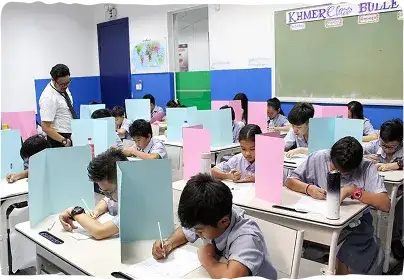

Secondary education is a crucial stage in a young person’s academic journey, bridging the gap between primary learning and higher education or vocational opportunities. Many parents and students often ask, “What is secondary education?”
It typically refers to the stage of schooling that begins around ages 12 to 13 and continues until around 18, depending on the education system of a particular country. During these formative years, students go beyond basic literacy and numeracy to engage in deeper cognitive development, social learning and character building. Why secondary education is importantis evident as it lays the foundation for adulthood by shaping a student’s personality, critical thinking skills, future career prospects and global awareness. Understanding why secondary education is important is vital for all parents, educators and policymakers invested in preparing the next generation for success.
1. Further Expands on the Personal Growth of the Student
Secondary education plays a transformative role in shaping a student’s identity, confidence and sense of purpose. At this stage, students begin exploring personal interests, strengths and values. They are given the freedom to choose specific academic subjects or extracurricular activities that align with their passions, such as science, arts, music or sports. This exploration helps develop self-awareness and emotional maturity.
This personal growth is crucial because it enables students to make informed decisions about their future careers and life goals. Adolescence is a complex time, and secondary schools provide essential guidance through counselling programmes, mentorship and life skills education. Through these supportive structures, students learn independence, responsibility and resilience. Those are the qualities that are necessary for success beyond school.
For instance, a student who discovers a passion for biology during secondary school may choose to pursue a career in medicine or scientific research. Similarly, a student involved in student leadership roles builds interpersonal and organisational skills that become valuable in future professions. In this way, secondary education supports holistic development, shaping both academic success and personal character.
2. Provides More Opportunities to Develop Social Skills in a Controlled Environment
Secondary education also offers students a safe and structured environment to develop essential social skills. During primary school, peer interaction is simpler and less demanding. But in secondary school, social relationships become more complex, requiring teamwork, communication and empathy.
Schools act as mini-societies where students learn to collaborate with peers from different backgrounds and perspectives. They participate in group projects, debates and leadership roles, developing emotional intelligence and conflict resolution skills. These experiences prepare students for future professional environments, where teamwork and communication are vital.
For example, a student working in a school science club learns how to share ideas, listen to others and solve challenges collaboratively. A drama club member gains confidence in public speaking and creative expression. Such experiences cultivate essential interpersonal skills that shape successful adults.
3. Emphasises Practical Critical Thinking Beyond Academics
Secondary education goes far beyond textbook learning. It fosters the development of higher-order thinking skills such as analysis, evaluation and problem-solving. Subjects like mathematics, literature and science encourage students to question, interpret and form logical conclusions based on evidence.
These skills are important because they empower students to navigate real-world situations. Critical thinking enables them to make responsible choices, evaluate information critically and approach challenges with innovation. In a world filled with misinformation and complex global issues, the ability to think independently has never been more important.
For example, a student studying history learns to analyse multiple viewpoints before forming a conclusion. Likewise, science experiments help students understand the link between theory and real-life application. These learning experiences build mental agility and prepare students for the demands of university education and the workplace.
4. Enhances the Employability of the Student
One of the most practical benefits of secondary education is the boost it gives to future career opportunities. Employers today value not only academic qualifications but also soft skills such as communication, leadership and adaptability. These are all the skills and traits which are nurtured during secondary schooling.
Many secondary schools offer career guidance programmes, internships and vocational training. These opportunities expose students to different industries and help them gain practical experience early in life. For students wondering how to apply for secondary education that supports their career development, choosing schools with strong career services and industry partnerships can be a great start.
For example, a student interested in engineering may participate in robotics competitions, while one aiming for a business career may join entrepreneurship clubs. These experiences enhance employability by developing both technical knowledge and workplace skills.
5. Develops the Student’s Creativity
Creativity is no longer considered a soft skill. It becomes a vital asset in today’s constantly innovating world. Secondary education encourages creative thinking through subjects like literature, music, visual arts and technology. These subjects allow students to express themselves, experiment with ideas and think outside the box.
Whether composing music, designing digital artwork or writing essays, creative activities help students grow intellectually and emotionally. Creativity also builds problem-solving skills by teaching students to approach challenges from unique angles.
6. Helps Acclimate Students to a Global Society
We live in an interconnected world, and secondary education prepares students to thrive in a global society. Modern curricula often include international perspectives, second-language learning and cultural studies. These broaden a student’s worldview and encourage global awareness and cultural sensitivity.
For example, secondary education in Cambodia or at an international school in Phnom Penh, Cambodia exposes students to global challenges like climate change, poverty and sustainability. These experiences inspire students to become responsible global citizens with a sense of social responsibility.
In Summary
Secondary education is much more than an academic requirement. It is a transformative journey that shapes a student’s future. It builds character, social responsibility, employability and creativity while preparing young minds for adulthood. Understanding what secondary education is and why it is important helps parents and students make informed educational choices. For families exploring how to apply for secondary education, choosing a school that offers a holistic, future-focused curriculum can open doors to global opportunities and lifelong success.