

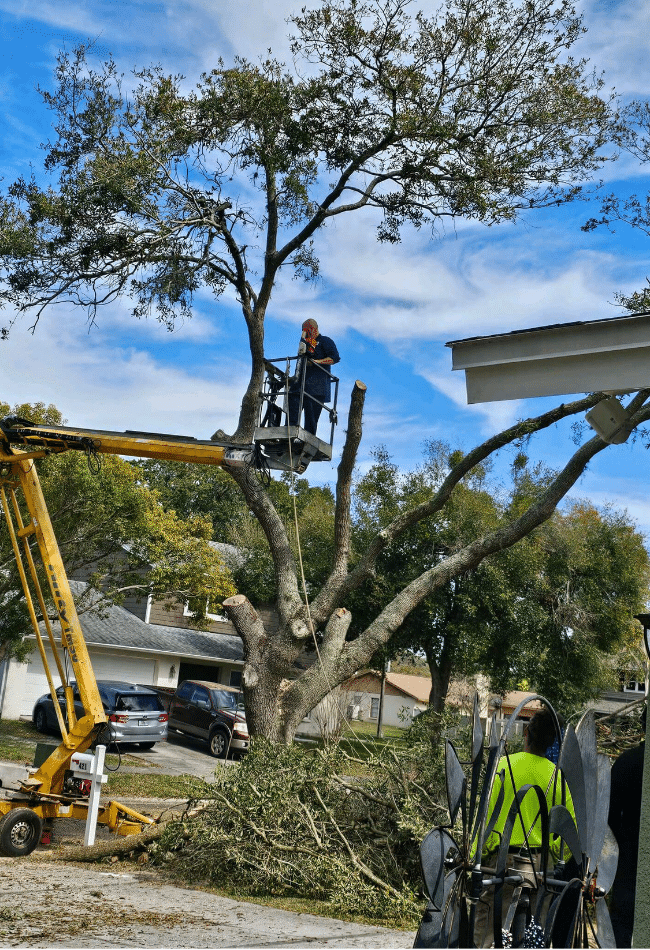

Tampa is one of the fastest-growing cities in Florida, and for good reason. The warm climate, waterfront lifestyle, and lush green landscapes make it an incredibly attractive place to call home. But that same subtropical environment that makes Tampa beautiful also creates serious challenges for homeowners when it comes to the trees on their property. Between hurricane season, sandy soil, rapid growth cycles, and strict local tree ordinances, owning a home in Tampa means dealing with tree-related issues that most people in other parts of the country never have to think about.
If you have recently moved to the area or have been here for years without giving your trees much thought, this article is for you. Understanding how Tampa’s unique environment affects the trees on your property, and knowing when to call in professionals who specialize in tree care in Tampa Bay area, can save you thousands of dollars and keep your family safe.
Tampa’s Climate Grows Trees Fast — and That Is Not Always a Good Thing
Tampa sits in USDA Hardiness Zone 9b-10a, which means mild winters and long, hot, humid summers. Trees here do not go dormant the way they do in northern states. They grow year-round, which sounds great until you realize what that actually means for your property.
Species like water oak, laurel oak, and camphor grow aggressively in Tampa’s climate. A water oak can add three to five feet of height per year in its early decades. That rapid growth produces soft, weak wood that is far more prone to breakage than slower-growing hardwoods. Laurel oaks are especially problematic because they look healthy and full on the outside while developing internal decay that remains completely hidden until a major limb snaps during a summer thunderstorm.
Even the beloved southern live oak, which is Tampa’s most iconic tree species, creates challenges when left unmanaged. Live oaks produce enormous spreading canopies that can extend 60 to 80 feet wide. Without regular structural pruning, the sheer weight of those lateral branches creates leverage that can split major limbs away from the trunk, especially when loaded with rainwater during Tampa’s afternoon storms.
Tampa homeowners also deal with palm species that require their own type of maintenance. Sabal palms, queen palms, and royal palms all drop heavy fronds that can damage cars, patio furniture, and fencing. Dead frond boots left on the trunk become a harborage for rats, roaches, and wasps. Proper palm maintenance is not just cosmetic. It is a pest control and safety issue.
Hurricane Season Is Not a Maybe in Tampa — It Is an Annual Reality
Tampa Bay went decades without a direct hurricane hit, which created a false sense of security among many residents. Then Hurricane Ian in 2022 and Hurricane Milton in 2024 reminded everyone that Tampa is not immune. The Tampa Bay metro area sits in one of the most vulnerable storm surge zones in the entire United States, and the tree damage from these recent storms was staggering.
The trees that failed during those storms shared common characteristics. They were either dead or declining, had co-dominant stems with weak attachments, carried excessive canopy weight that acted as a sail in high winds, or had compromised root systems in Tampa’s notoriously sandy soil. In almost every case, a pre-season inspection by a qualified arborist could have identified the risk and either corrected it through pruning and cabling or recommended removal before the storm arrived.
Storm hardening is a service that every Tampa homeowner should schedule annually before June, which marks the start of hurricane season. The process involves a certified arborist evaluating each tree on the property for wind vulnerability, then performing targeted pruning to reduce the canopy’s wind load without damaging the tree’s health. For trees with structural weaknesses that pruning alone cannot fix, cable and bracing systems provide supplemental support that can mean the difference between a tree surviving a Category 2 hurricane and a tree landing on your roof.
The cost of pre-season storm hardening is a few hundred to a couple thousand dollars depending on the number and size of trees. The cost of an emergency tree removal after it has fallen on your house during a hurricane starts at $5,000 and can exceed $15,000 for crane-assisted jobs, not including the structural repairs to your home.
Tampa’s Tree Ordinances Will Fine You If You Do Not Follow the Rules
One thing that catches many Tampa homeowners off guard is how strictly the city regulates tree removal. The City of Tampa has a Grand Tree Ordinance that protects trees of a certain size, and removing one without a permit carries serious penalties.
Under Tampa’s code, any tree with a trunk diameter of 24 inches or more measured at breast height is classified as a grand tree. You cannot remove a grand tree from your property without first obtaining a permit from the city. The permit process requires an arborist report documenting why the tree needs to be removed, whether it is dead, dying, hazardous, or causing documented structural damage. If you remove a grand tree without a permit, the fines are calculated per inch of trunk diameter and can easily reach several thousand dollars. In some cases, the city also requires replacement planting at a ratio that can mean planting multiple new trees for every one removed.
Hillsborough County, which surrounds Tampa, has its own set of tree protection regulations that apply to unincorporated areas. And if your property is within an HOA, there is likely an additional layer of approval required before any tree work can begin.
Navigating this bureaucracy is one of the many reasons professional tree care companies exist. ISA-certified arborists handle the entire permit process, from the initial assessment and arborist report to the city application and HOA coordination. They know exactly what documentation Tampa requires and how to present a case that gets approved without delays.
Tampa’s Sandy Soil Creates a Root Problem Most Homeowners Miss
If you have lived in Tampa long enough, you have probably noticed that the soil here is nothing like what you find in the Midwest or Northeast. Tampa sits on a base of fine sand with a water table that can be surprisingly close to the surface, especially in neighborhoods near the bay like South Tampa, Davis Islands, and Shore Acres.
This sandy soil has a direct impact on how tree roots behave. In clay-heavy soils, tree roots tend to grow deep, creating a strong anchoring system. In Tampa’s sandy soil, roots spread laterally just below the surface because that is where the moisture and organic material are. These shallow, spreading root systems create two major problems.
First, shallow roots mean less anchoring. When Tampa’s sandy soil becomes saturated during heavy rains, which happens regularly from June through September, the root plate’s grip on the ground weakens dramatically. This is why Tampa sees so many trees topple completely intact during storms rather than snapping at the trunk. The entire root system simply releases from the waterlogged sand.
Second, those laterally spreading roots aggressively seek out moisture sources around your home. Foundation perimeters, irrigation lines, sewer pipes, pool plumbing, and septic systems all become targets. Species like ficus and camphor are especially destructive. Their roots can crack concrete foundations, lift pool decks, infiltrate plumbing joints, and buckle driveways. In neighborhoods like Carrollwood, Westchase, and New Tampa where mature trees are common on residential lots, root damage to hardscaping and foundations is one of the most frequent and expensive property issues homeowners face.
Root barrier installation is the preventive solution. High-density polyethylene panels are installed vertically in a trench between the tree and the structure you need to protect. The barrier redirects root growth downward and away from your foundation without killing the tree. Installed proactively, a root barrier costs between $1,000 and $2,500. The foundation repair it prevents can cost $15,000 or more.
Tampa’s Waterfront Properties Face an Extra Layer of Regulation
If you own waterfront property along Tampa Bay, Hillsborough Bay, Old Tampa Bay, or any of the tidal creeks and inlets that wind through the metro area, you are almost certainly dealing with mangroves. And mangroves in Florida are not just any vegetation. They are protected by state law.
The 1996 Florida Mangrove Trimming and Preservation Act sets strict rules about how mangroves can be trimmed, who can trim them, and when permits are required. Homeowners are allowed to trim mangroves below a certain height without a permit, but only following specific guidelines. Mangroves above the threshold, or those in certain environmental zones, require a professional permit from the Florida Department of Environmental Protection.
Violations are not taken lightly. Fines can reach $10,000 per offense, and the property owner may be required to fund a restoration project at their own expense. For waterfront homeowners in neighborhoods like Bayshore Beautiful, Beach Park, and Ballast Point who want to maintain their water views without breaking the law, professional mangrove trimming is essential. Certified arborists handle the DEP permitting process and perform the trimming in full legal compliance.
The Neighborhoods Where Tree Problems Hit Hardest
Tampa is a city of distinct neighborhoods, and tree care challenges vary significantly depending on where you live.
South Tampa and Hyde Park feature some of the oldest and largest live oaks in the metro area. These grand trees are magnificent but require regular structural pruning to manage their massive canopy weight. Many properties in this area also deal with root conflicts because the lots are relatively small and the trees are very large.
Seminole Heights and Tampa Heights are experiencing a building boom, and new construction frequently damages existing tree root zones. Trees that lose a significant portion of their roots during construction can take years to show symptoms, then suddenly decline or fail. If you have recently had work done on or near your property, a post-construction tree assessment is strongly recommended.
Carrollwood and Westchase have mature landscaping with dense canopy coverage. These neighborhoods frequently deal with overgrown trees touching rooflines, blocking airflow, and creating pest pathways into attics. Regular clearance pruning is essential.
New Tampa and Tampa Palms were developed more recently, but the trees planted during initial construction are now reaching maturity. Water oaks and laurel oaks planted 15 to 20 years ago are entering the phase of their life cycle where internal decay becomes a serious concern. Proactive risk assessments in these neighborhoods can identify trees that look healthy but are structurally compromised.
Davis Islands and Harbour Island are surrounded by water and face maximum storm surge exposure. Trees on these islands need aggressive storm hardening before every hurricane season, and any dead or declining trees should be removed immediately rather than left to become projectiles during a direct hit.
Stop Treating Tampa Tree Care Like an Afterthought
Your trees are the largest, heaviest living things on your property. In Tampa’s environment, they grow faster, face more extreme weather, and are subject to more regulation than in almost any other major U.S. city. Treating them as background scenery is a gamble that costs Tampa homeowners thousands of dollars every single year in emergency removals, foundation repairs, insurance claim denials, and code violation fines.
The smartest move you can make is to schedule a professional tree assessment before this year’s hurricane season begins. Have every tree on your property evaluated by an ISA-certified arborist who understands Tampa’s soil, climate, species, and local regulations. Address the small problems now so they never become big ones.
Your home is likely the largest investment you will ever make. The trees surrounding it deserve the same level of professional attention you give your roof, your plumbing, and your electrical system. In Tampa, that is not optional. It is essential